

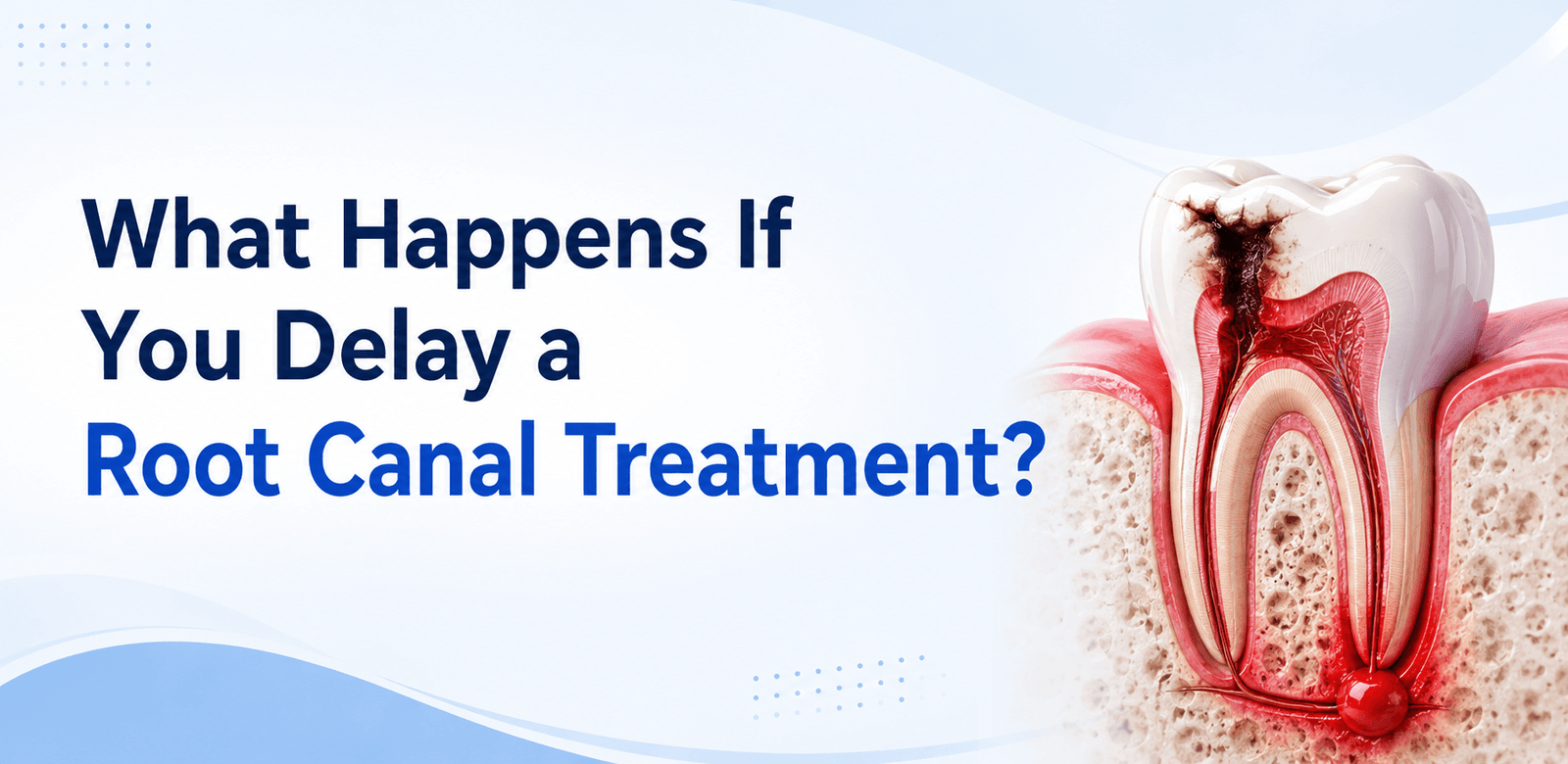
A lot of people don’t delay Root Canal Treatment because they don’t care. They delay it because the pain faded, life got busy, or the tooth stopped demanding attention for a while. That’s what makes infected teeth so deceptive. They sometimes get quieter right before they get worse.
The silence can be misleading.
Pain Doesn’t Always Mean the Infection Is Growing
Many people assume more infection equals more pain.
Oddly enough, that’s not always true. A tooth can hurt intensely for days and then suddenly feel better. I’ve had patients call to cancel treatment because they thought the problem solved itself.
Sometimes it hasn’t.
In some cases, the nerve inside the tooth dies completely. Once that nerve stops functioning, the sharp pain may disappear even while bacteria continue spreading deeper into the root and surrounding bone.
One thing that surprised me years ago was how often patients described this as “good news.” From a biological standpoint, it was often the opposite.
Risks of Delaying Root Canal Treatment Go Beyond the Tooth
Here’s the part that doesn’t get enough attention.
An infected tooth is not a sealed container. The infection begins inside the pulp, but bacteria can eventually travel through the root tip into the surrounding bone and tissues.
The body fights back.
Sometimes that battle stays localized. Sometimes it creates swelling, tenderness, or an abscess. Predicting exactly when an infection will spread is difficult because every person’s immune response is different.
I’ve seen tiny-looking infections create dramatic facial swelling, while larger infections sat quietly for months before anyone noticed.
The size on an X-ray isn’t always the whole story.
Picture This: The Tooth Is Still There, But It’s Getting Weaker
A patient cracks a tooth while eating. The damage reaches the pulp, and a Root Canal Treatment is recommended. They avoid chewing on that side and manage surprisingly well for several months.
The infection doesn’t just affect the nerve. Over time, the tooth structure may become more fragile because of decay, cracks, or ongoing bacterial damage. What might have been saved with a straightforward procedure can eventually require extraction.
Treatment options change.
One oddly specific thing I’ve noticed is that many failing teeth break while patients are eating something soft, not hard. The final fracture often happens after weeks or months of gradual weakening.
Signs You Need a Root Canal Aren’t Always Dramatic
Not every infected tooth announces itself.
After drinking something cold, some people feel a sharp sensation that lingers far longer than it should. Others notice tenderness when biting, a small gum pimple, or a tooth that feels strangely different from neighboring teeth.
The details matter.
A common misconception is that severe pain must be present before treatment is necessary. In reality, some of the teeth needing treatment cause surprisingly little discomfort.
What patients often remember later is not pain but a vague feeling that something wasn’t right.
That feeling deserves attention.
Root Canal Treatment Usually Gets More Complicated With Time
That’s not a scare tactic.
The longer an infection remains active, the greater the chance that additional damage occurs around the tooth. More bone loss, more structural breakdown, or more extensive infection can affect treatment planning.
Not always.
There are certainly cases where a patient waits and the situation changes very little. Dentistry isn’t perfectly predictable. But if you asked me which patients had the simplest appointments, they were usually the ones who addressed the problem before it had months or years to evolve.
The easiest root canal is often the one done before the tooth starts creating new problems.
Frequently Asked Questions
How long can I delay a root canal?
There is no universal timeline. Some teeth remain stable for a period, while others worsen quickly. The problem is that it’s difficult to predict which category a tooth will fall into.
Can antibiotics replace a root canal?
Usually no. Antibiotics may reduce symptoms temporarily, but they generally cannot remove bacteria trapped inside an infected tooth’s root canal system.
What happens if a tooth infection spreads?
The infection may affect surrounding bone, gums, or facial tissues. In more serious cases, swelling can become significant and require urgent care.
Is extraction better than a root canal?
It depends on the tooth and its condition. Preserving a natural tooth is often preferred when possible, but some situations make extraction the more practical option.
Years ago, I assumed people delayed treatment because they underestimated the infection. The longer I’ve practiced, the more I’ve realized most people delay because they’re hoping the tooth will make the decision for them.
Sometimes it does.
The problem is that infected teeth rarely choose the outcome you’d choose for yourself. If a dentist has already recommended evaluation or Tooth Infection Treatment, getting clarity early usually creates more choices, not fewer.
At Omlesh’s Dentcity in Rohini Sector 8, many patients come in worried that they’ve waited too long. Most of the conversation isn’t about judgment. It’s about figuring out what options still exist today.
