

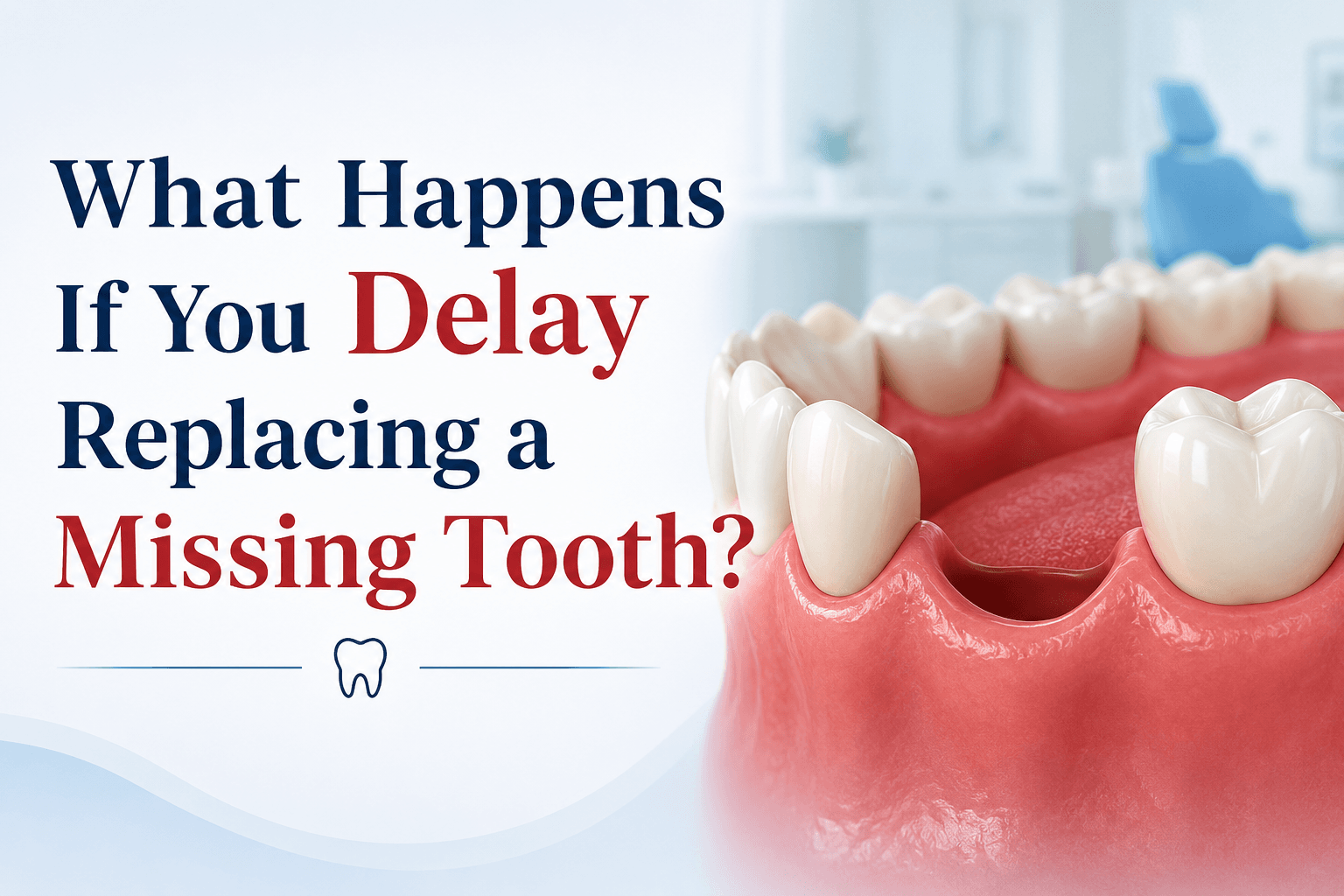
A surprising number of people lose a tooth, feel a little annoyed for a week, and then adapt so well they stop thinking about it entirely. The problem is that your mouth doesn’t forget. While you get used to the gap, changes are already happening underneath, which is why Missing Tooth Replacement is usually discussed sooner rather than later.
Most of those changes are silent.
The Space Never Stays Empty
One of the stranger things about teeth is that they seem fixed, but they’re always trying to move.
After a tooth is lost, neighboring teeth often begin drifting toward the empty space. The movement is usually slow enough that patients don’t notice it on a daily basis. Then one day they look at an old photograph and realize their smile seems slightly different.
I’ve seen this happen many times.
A molar disappears, nobody rushes to Replace a Missing Tooth, and a few years later the teeth beside it lean just enough to trap food in places that were easy to clean before.
The gap changes shape.
That creates a problem many people don’t expect. A replacement that would have been straightforward earlier can become more complicated because the available space is no longer the same.
Bone Shrinkage Starts Earlier Than Most People Think
Here’s the part patients rarely feel.
Your jawbone depends on stimulation from tooth roots. Every time you chew, tiny forces travel through those roots into the bone. Remove the tooth and the bone no longer receives the same signal.
The body notices.
Within months, bone loss can begin in the area where the tooth once sat. The speed varies from person to person, and predicting exactly how much bone someone will lose is difficult. Some patients maintain bone surprisingly well. Others lose volume much faster than expected.
What surprised me early in my career was how often the outside of the gums still looked fairly normal while the bone underneath had already changed significantly.
The surface can be misleading.
This matters because a Dental Implant for Missing Tooth treatment relies on sufficient bone support. Less bone may mean additional procedures before an implant can be placed.
A Missing Back Tooth Can Affect Front Teeth
Picture someone who lost a lower molar five years ago.
They chew mostly on the other side because it’s easier. Nothing seems wrong. Then they start noticing wear on teeth that were never damaged before.
The connection isn’t always obvious.
Chewing forces are distributed across the entire mouth. When one area stops doing its share of work, other teeth often compensate. Some patients develop uneven wear. Others experience sensitivity, small fractures, or changes in their bite.
The Consequences of Missing Teeth aren’t always located where the tooth was lost.
That’s what makes diagnosis interesting. A patient may come in worried about a front tooth while the original problem started much farther back.
Not Every Tooth Replacement Option Fits Every Person
People sometimes assume there’s a single best answer.
There isn’t.
Age, bone levels, budget, health history, bite forces, and even personal preference influence treatment decisions. The internet loves simple rankings. Real dentistry rarely works that way.
Some patients choose a Dental Implant for Missing Tooth replacement because it functions independently and helps preserve bone. Others do well with bridges. Removable dentures still have a place in certain situations, despite being less fashionable in online discussions.
Different mouths need different solutions.
When discussing Tooth Replacement Options, I often spend more time explaining trade-offs than recommending a treatment. The right decision is usually the one that matches the patient’s long-term priorities, not the one with the most impressive marketing.
Frequently Asked Questions
How long can I wait before replacing a missing tooth?
There is no universal deadline, but changes in tooth position and bone levels can begin within months. Earlier evaluation generally creates more treatment choices.
Is a missing molar really a problem if nobody can see it?
Often yes. Back teeth handle significant chewing forces. Losing one may affect bite balance even when the gap isn’t visible while smiling.
Can bone loss be reversed later?
Sometimes lost bone can be rebuilt through grafting procedures, but results vary. Preserving existing bone is usually simpler than rebuilding it.
What is the most natural-looking replacement?
For many patients, an implant-supported crown provides the closest appearance and function to a natural tooth. Suitability depends on bone and health factors.
What I’ve noticed over the years is that people rarely regret replacing a missing tooth. What they regret is assuming nothing was changing because nothing hurt.
Teeth are unusual that way.
They often stay quiet while the situation slowly evolves in the background. If you’ve lost a tooth and haven’t thought much about it lately, it may be worth having it evaluated—not because every missing tooth becomes an emergency, but because choices tend to shrink as time passes.
At Omlesh’s Dentcity in Rohini Sector 8, we spend a lot of time helping patients understand those choices before the decision becomes more complicated than it needs to be.
