

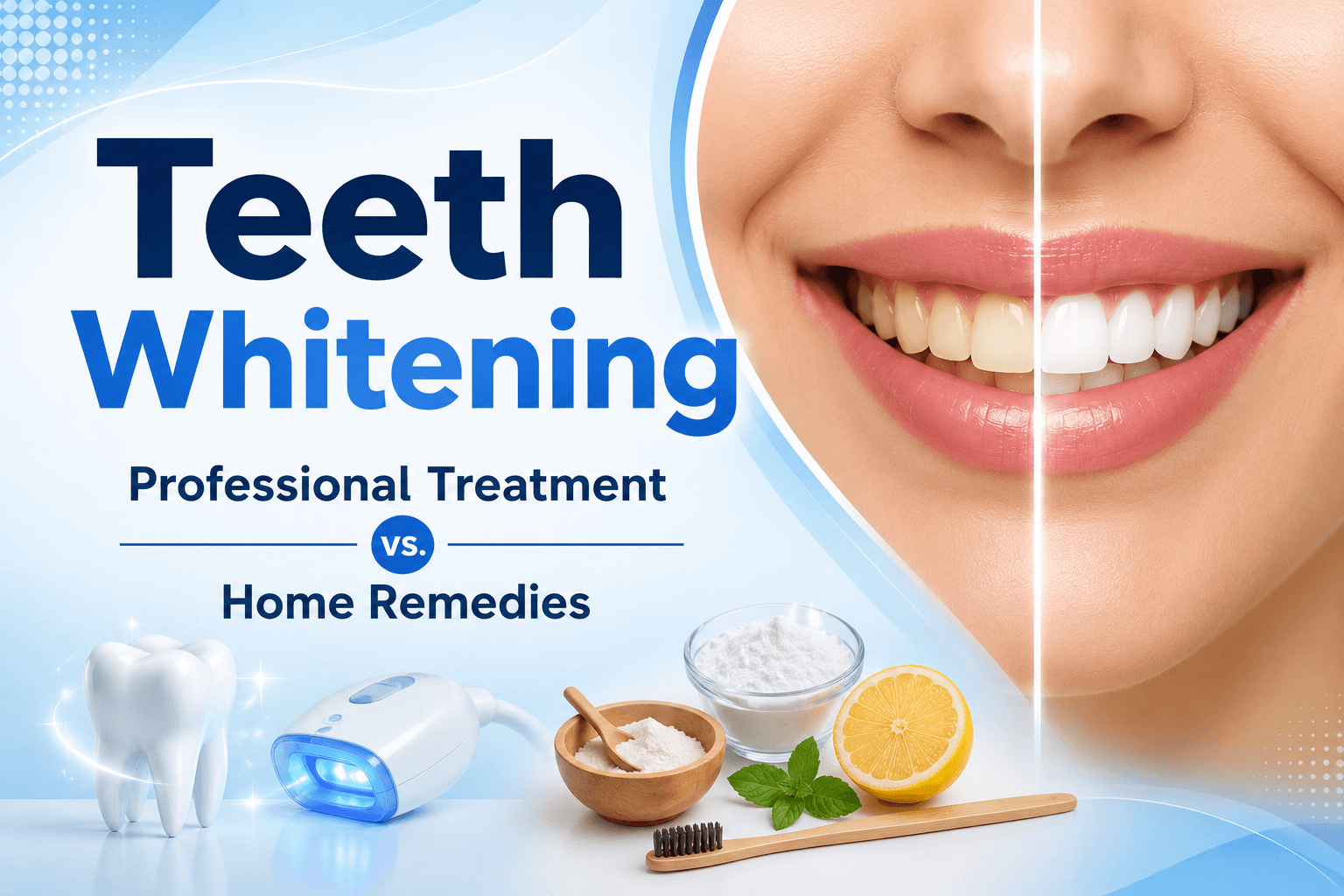
Someone usually says the same thing before sitting in my dental chair: “I tried every trick from the internet, but my teeth still don’t look white.” That’s where the conversation about Teeth Whitening usually begins—not with the treatment itself, but with expectations that slowly drifted away from reality.
Teeth aren’t painted white.
Here’s the part most whitening ads leave out
White teeth don’t always mean healthy teeth, and healthy teeth don’t always look perfectly white. Natural enamel has tiny variations in color, and the layer beneath it—called dentin—becomes slightly darker as we age. No toothpaste changes that.
That’s normal.
I’ve seen people brush harder because they think yellow stains simply need more effort. Unfortunately, enamel doesn’t respond to determination. It responds to chemistry. Scrubbing harder often wears the enamel down, making the yellow dentin underneath even more noticeable.
One patient actually polished tiny grooves into the front teeth after months of using a highly abrasive charcoal powder. The stains weren’t gone, but the sensitivity had definitely arrived.
Sometimes less brushing pressure gives a brighter smile.
Professional Teeth Whitening works differently than most people expect
Picture this: you walk into a clinic expecting a whitening session to feel like polishing a car. Instead, the dentist spends more time checking your teeth than applying the whitening gel.
There’s a reason.
Professional Teeth Whitening isn’t simply about making teeth lighter. Before treatment begins, we look for cavities, cracked fillings, exposed roots, gum disease, and existing restorations. Whitening agents don’t change the color of crowns, veneers, or composite fillings, which catches many patients by surprise.
That detail matters later.
Another thing surprises people. Coffee stains sitting on the enamel often disappear quite well, but gray discoloration caused by trauma or certain medications can be stubborn. Even modern whitening systems have limits, and any dentist promising “paper-white teeth in one visit” deserves a healthy amount of skepticism.
Sometimes the best result is simply natural-looking.
Home Remedies for Teeth Whitening: not all are harmless
After every viral video, someone asks me about baking soda, lemon juice, activated charcoal, coconut oil, or strawberries.
The list keeps growing.
Some home methods have a little science behind them. Baking soda, for example, can remove surface stains because it’s mildly abrasive, and many toothpastes already contain it in controlled amounts. Oil pulling has been studied too, although evidence that it actually whitens teeth remains limited.
Then there are the risky ones.
Lemon juice mixed with baking soda sounds clever until you remember that acid softens enamel. I’ve watched patients unknowingly brush immediately after using acidic mixtures, wearing away enamel they can never grow back. Ironically, the tooth can look darker afterward because thinner enamel allows more dentin color to show through.
Nature isn’t automatically gentle.
If you’re wondering why charcoal toothpaste sometimes seems to work, it’s usually because it removes surface stains—not because charcoal has magical whitening properties. Research hasn’t shown strong long-term benefits, and excessive abrasion may not be worth the trade-off.
What actually makes the Best Teeth Whitening Method?
That’s the wrong question.
The better question is why your teeth became darker in the first place. Coffee, tea, tobacco, aging, medications, fluorosis, old fillings, and enamel wear all create discoloration differently. Two people with similar-looking teeth may need completely different approaches.
Diagnosis comes first.
A simple professional cleaning sometimes improves the smile enough that whitening isn’t even necessary. Other patients discover the front teeth have old fillings that no longer match after whitening, meaning they may need cosmetic replacement afterward. That’s something social media rarely mentions.
I’ve had patients postpone whitening after realizing the real issue was heavy tartar, not tooth color.
The Best Teeth Whitening Method isn’t always the strongest gel. It’s the method that matches the reason the discoloration happened.
Frequently Asked Questions
Does Teeth Whitening damage enamel?
When performed correctly with approved whitening products and proper supervision, whitening does not permanently damage healthy enamel. Temporary sensitivity is common and usually settles within a few days.
How long does Professional Teeth Whitening last?
Results often last from six months to two years. Coffee, tea, smoking, and oral hygiene habits influence how quickly teeth begin to stain again.
Are home whitening remedies safe?
Some are relatively harmless when used carefully, while acidic or highly abrasive remedies can damage enamel. It’s better to ask a dentist before trying trends from social media.
Can crowns or veneers become whiter after whitening treatment?
No. Whitening products only affect natural teeth. Existing crowns, veneers, and tooth-colored fillings keep their original shade.
The interesting thing about a brighter smile is that people rarely notice the exact shade. They notice whether the smile looks healthy, natural, and effortless. Those three things are much harder to fake than “Hollywood white.”
If you’re considering Teeth Whitening and aren’t sure whether professional treatment or home care makes more sense, a consultation usually clears up the confusion faster than another evening spent comparing internet tips. At Omlesh’s Dentcity, Rohini, we prefer helping patients understand their options before recommending any treatment.
