

Most patients never ask whether a clinic is NABH accredited. They ask if the dentist is “good,” whether the treatment will hurt, or why one clinic looks spotless on Instagram but feels chaotic the moment you sit in the chair.
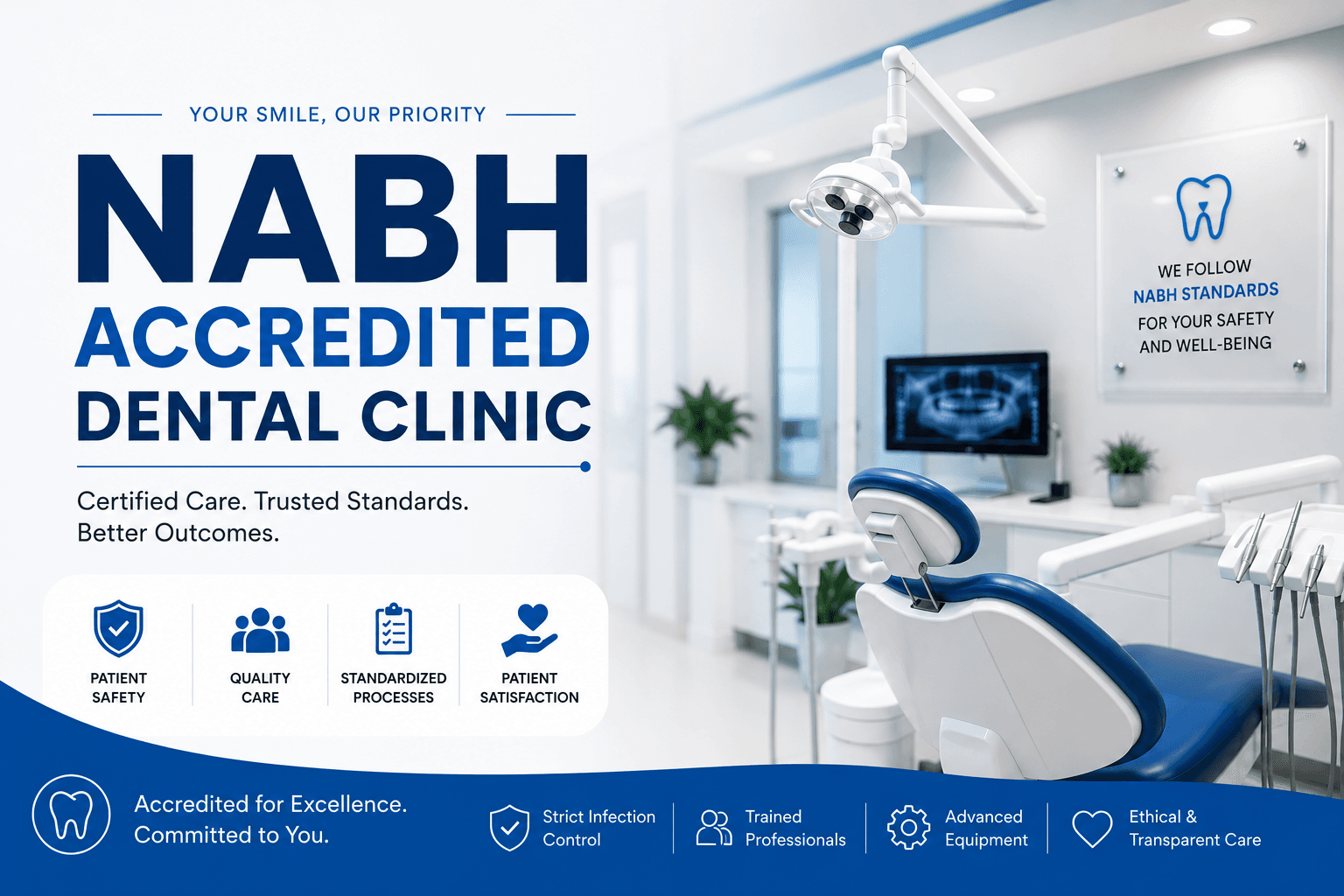
That’s usually where a NABH Accredited Dental Clinic quietly changes things. Not with fancy words. With systems people don’t notice unless something goes wrong.
A receptionist confirming sterilization records at 8:30 in the morning is not exciting content. But honestly, that tiny habit probably matters more than the imported coffee machine in the waiting room.
The strange thing about clean clinics
Patients assume every dental clinic follows the same hygiene rules.
They don’t.
Some clinics are meticulous about instrument tracking, waterline disinfection, biomedical waste handling, and emergency preparedness. Others… rely heavily on “looks clean enough.” Those are not the same thing.
A NABH-certified dental clinic is pushed to document processes that many smaller clinics keep informal. That paperwork sounds boring until you realize dental treatment involves blood, aerosols, sharp instruments, chemicals, and cross-contamination risks happening in a room the size of a small bedroom.
One forgotten sterilization pouch can ruin trust instantly.
What surprised me years ago was how often problems in clinics had nothing to do with clinical skill. Good dentists can still work inside messy systems. Instruments get delayed. Records disappear. Follow-ups slip through gaps. NABH accreditation tries to reduce those invisible failures.
Not perfectly. Nothing is perfect.
But the difference between “we usually do this” and “we document this every single time” is bigger than people think.
Benefits of NABH accreditation are mostly invisible
obody walks out saying, “Wow, excellent infection control checklist.”
Patients notice other things instead.
They notice the assistant already knows their medical history before treatment starts. They notice emergency medicines are not expired. They notice consent forms are actually explained instead of pushed across the desk with a pen.
Small details accumulate.
One of the oddest things I’ve seen? Clinics with expensive décor but no clear protocol for handling a fainting patient. Meanwhile, a modest clinic with proper systems can manage emergencies calmly because everyone already knows their role.
That matters during dental procedures.
The Benefits of NABH accreditation are often operational rather than cosmetic. Standardized sterilization. Documentation. Staff training. Patient safety audits. Equipment maintenance schedules. Complaint handling systems. These don’t seem glamorous, which may be why patients rarely search for them first.
Until something goes wrong somewhere else.
A lot of people assume accreditation guarantees perfect treatment outcomes. It doesn’t. Dentistry still depends heavily on diagnosis, patient habits, healing response, and sometimes pure biology. Teeth can surprise even experienced dentists.
But safer systems reduce avoidable mistakes.
That’s the point.
Safe dental treatment standards are not only about instruments
After COVID, patients became more aware of masks, gloves, and sanitizers. Fair enough. But Safe dental treatment standards go beyond visible hygiene.
Water quality matters too.
Dental chairs use narrow waterlines where bacteria can build up quietly over time if maintenance is ignored. Most patients never think about the water sprayed during cleaning or drilling procedures. Honestly, many didn’t even know dental chairs have internal water systems.
Now they do.
A properly monitored clinic usually has schedules for disinfection, equipment servicing, and biological testing. Again, boring paperwork. Yet these routines are the backbone of patient safety.
There’s another side people miss.
Staff exhaustion changes treatment quality. A clinic running without systems often becomes chaotic during rush hours. Instruments pile up. Appointments overlap. Communication breaks down. You can feel the tension sitting in the waiting room.
Order affects care.
At a Trusted dental clinic in Delhi, patients often judge confidence subconsciously. They may not understand sterilization indicators or accreditation protocols, but they notice whether the environment feels controlled or rushed.
Humans are surprisingly good at sensing disorder.
Why do patients ask about NABH more often now
Five years ago, almost nobody in Rohini brought this up during consultations.
Now they do.
Partly because patients research more before treatment. Partly because healthcare stories travel fast online. One bad incident in any clinic anywhere makes people suddenly curious about standards everywhere else.
A NABH dental clinic gives some patients psychological relief before treatment even begins. Especially elderly patients. Or parents bringing their children for procedures. Or people are already anxious about implants and surgeries.
Dental fear changes behavior.
Patients forget instructions. Delay treatment. Cancel procedures. Ask the same question three times because anxiety blocks memory. A clinic environment that feels organized actually reduces part of that stress.
I’ve seen patients visibly relax after a simple tour of the sterilization area.
Not because they understood every machine. Because transparency calms people.
And honestly, accreditation also changes how clinics see themselves internally. Staff tend to become more disciplined when systems are audited regularly. Habits improve because someone is always checking whether protocols are followed consistently.
Routine shapes culture.
A clinic can look modern and still cut corners
This part makes some people uncomfortable.
New interiors don’t automatically mean safer dentistry. Neither do social media reels showing imported chairs and dramatic smile transformations. A polished clinic can still ignore documentation, sterilization tracking, or emergency preparedness.
The reverse can also be true.
Some older clinics operate with astonishing discipline because the dentist is obsessive about systems. Every instrument logged. Every assistant trained repeatedly. Every patient record updated immediately instead of “later.”
That last word causes chaos.
Patients searching for a Trusted dental clinic in Delhi often focus only on reviews. Reviews help, sure. But reviews usually describe personality, waiting time, cost, or friendliness. They rarely tell you whether sterilization cycles are monitored correctly.
