

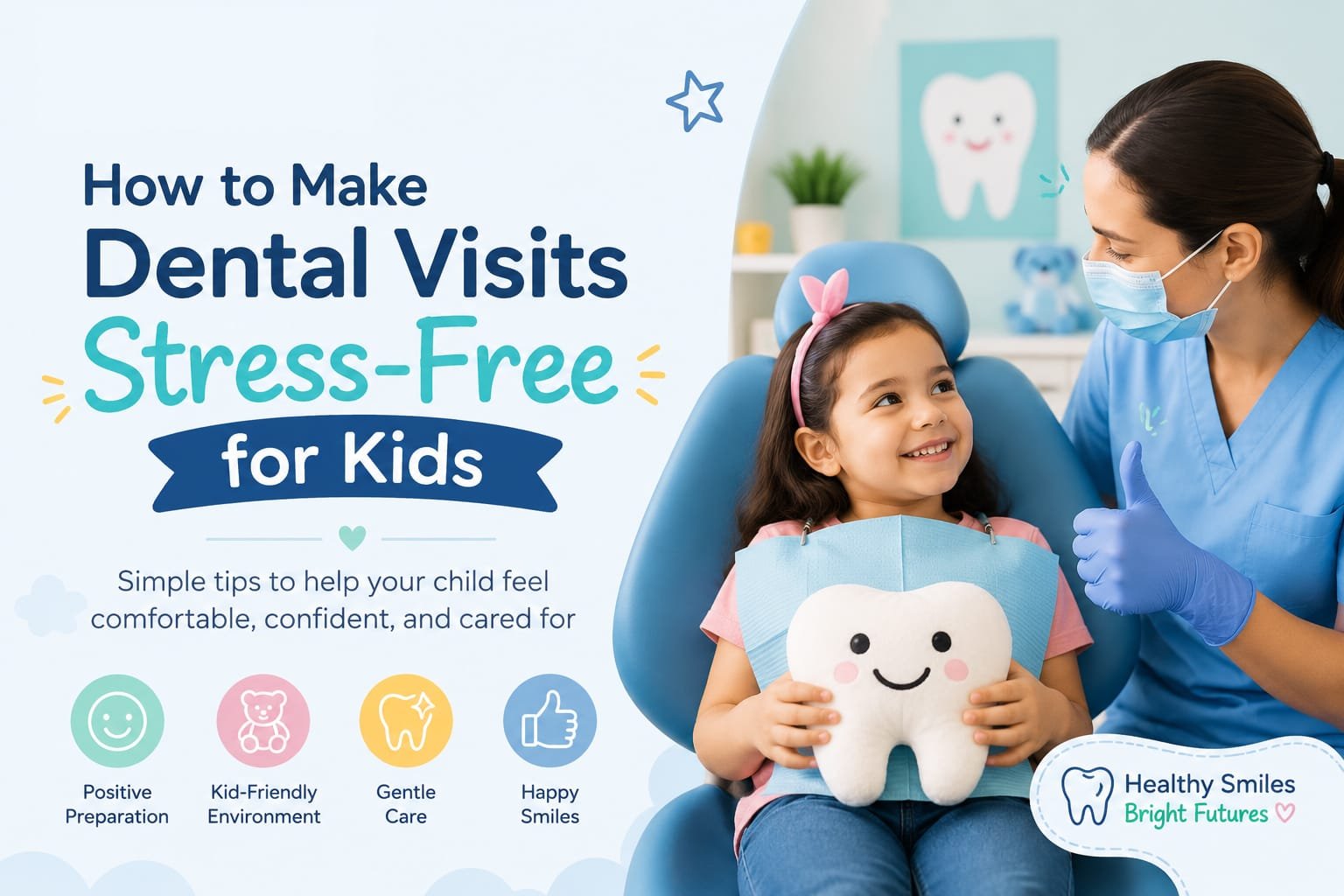
Some children walk into a dental clinic and hop onto the chair like it’s an amusement ride. Others grip their parent’s hands so tightly their knuckles turn white. Most fall somewhere in between.
The conversation around Stress-Free Dental Visits for Kids often focuses on techniques and tricks. In practice, what matters more is how a child feels long before they ever sit in the chair.
The First Dental Visit for Kids Starts at Home, Not the Clinic
A surprising number of children become nervous because of stories they hear from adults.
Parents rarely mean any harm. But phrases like “Don’t worry, it won’t hurt” can accidentally signal that there is something scary waiting ahead. A child who wasn’t worried suddenly starts wondering what everyone is worried about.
I’ve seen this happen.
One little boy spent ten minutes asking whether he was getting an injection. Nobody had mentioned injections during treatment planning. His grandmother had simply said, “Be brave.”
Instead, try describing the visit as something ordinary. You visit the doctor when needed. You visit the dentist too. No drama attached.
How parents talk matters more than many people expect.
A Child-Friendly Dental Clinic Feels Different Before Treatment Begins
A five-year-old walks into a silent room filled with unfamiliar equipment, bright lights, and adults speaking in medical terms. Even many adults would feel uncomfortable.
Now picture a space with friendly staff, simple explanations, and a dentist who spends the first few minutes talking about school, cartoons, or cricket.
The treatment may be exactly the same.
The experience isn’t.
One thing that still surprises me after years of practice is how much children notice tiny details. Some remember the color of the chair. Others remember a cartoon sticker they received six months earlier.
The dental chair is rarely the scary part.
The uncertainty is. That’s why a good Child-Friendly Dental Clinic focuses on helping children understand what’s happening before anything happens.
Why Familiarity Reduces Dental Anxiety in Children
Children generally fear the unknown more than the known.
A mirror shown before use becomes less threatening. A suction device explained as a “tiny vacuum cleaner for water” suddenly feels interesting rather than frightening.
Simple explanations work.
Not because children need every detail, but because knowing what comes next gives them a sense of control.
Not Every Children’s Dental Checkup Needs Treatment
Many parents assume a dental appointment means something will be done.
Sometimes the best appointment is the one where nothing happens beyond a checkup, a quick cleaning, and a conversation.
A routine Children’s Dental Checkup allows children to build positive memories without the pressure of treatment. They learn what the clinic looks like, how the chair moves, and who the dentist is.
Those experiences add up.
Years later, when treatment is actually needed, the environment already feels familiar.
One of the calmest young patients I know spent three years visiting only for preventive checkups. By the time he needed a filling, he treated the appointment like any other day.
That didn’t happen by accident.
What Most Parents Get Wrong About Rewards
Bribery and encouragement sound similar, but children often know the difference.
“If you don’t cry, I’ll buy you a toy” creates a strange message. The child begins wondering whether the appointment is difficult enough to deserve a reward.
A sticker after the visit feels different.
So does celebrating their cooperation, curiosity, or courage instead of focusing only on whether they cried.
What works best is often surprisingly simple.
Acknowledgment.
Children like feeling proud of themselves. They like hearing, “You listened really well today,” or “You asked great questions.”
Those comments tend to stay with them longer than candy or toys.
Finding the Right Pediatric Dentist in Rohini
Not every child connects with every dentist.
That’s normal.
Some children respond to humor. Others prefer gentle reassurance. A few want detailed explanations for everything. The right Pediatric Dentist in Rohini understands that children’s personalities vary just as much as adults’.
At Omlesh’s Dentcity in Rohini, New Delhi, one of the goals during pediatric appointments is not simply completing treatment. It’s helping children leave feeling more comfortable than when they arrived.
That difference matters.
Because the memory a child takes home often shapes the next appointment more than the treatment itself.
Frequently Asked Questions
How old should a child be for the first dental visit?
Most pediatric dental organizations recommend scheduling the first visit by the child’s first birthday or within six months of the first tooth appearing.
What causes dental anxiety in children?
Fear of unfamiliar environments, previous negative experiences, stories from others, or uncertainty about what will happen can all contribute.
Should parents stay with their child during treatment?
For younger children, parental presence often helps. Older children sometimes cooperate better independently. It depends on the child’s comfort level and the dentist’s approach.
How often should children have dental checkups?
Most children benefit from a checkup every six months, though some may need more frequent visits based on their dental needs.
A child doesn’t remember every detail of a dental appointment. They usually remember how they felt.
That’s why the goal isn’t raising a child who never feels nervous. It’s helping them discover that feeling nervous and having a good experience can happen at the same time. And once that happens, future visits become much easier.
If you’re looking for guidance on your child’s dental journey, the team at Omlesh’s Dentcity in Rohini is always happy to answer questions before an appointment even begins.
