

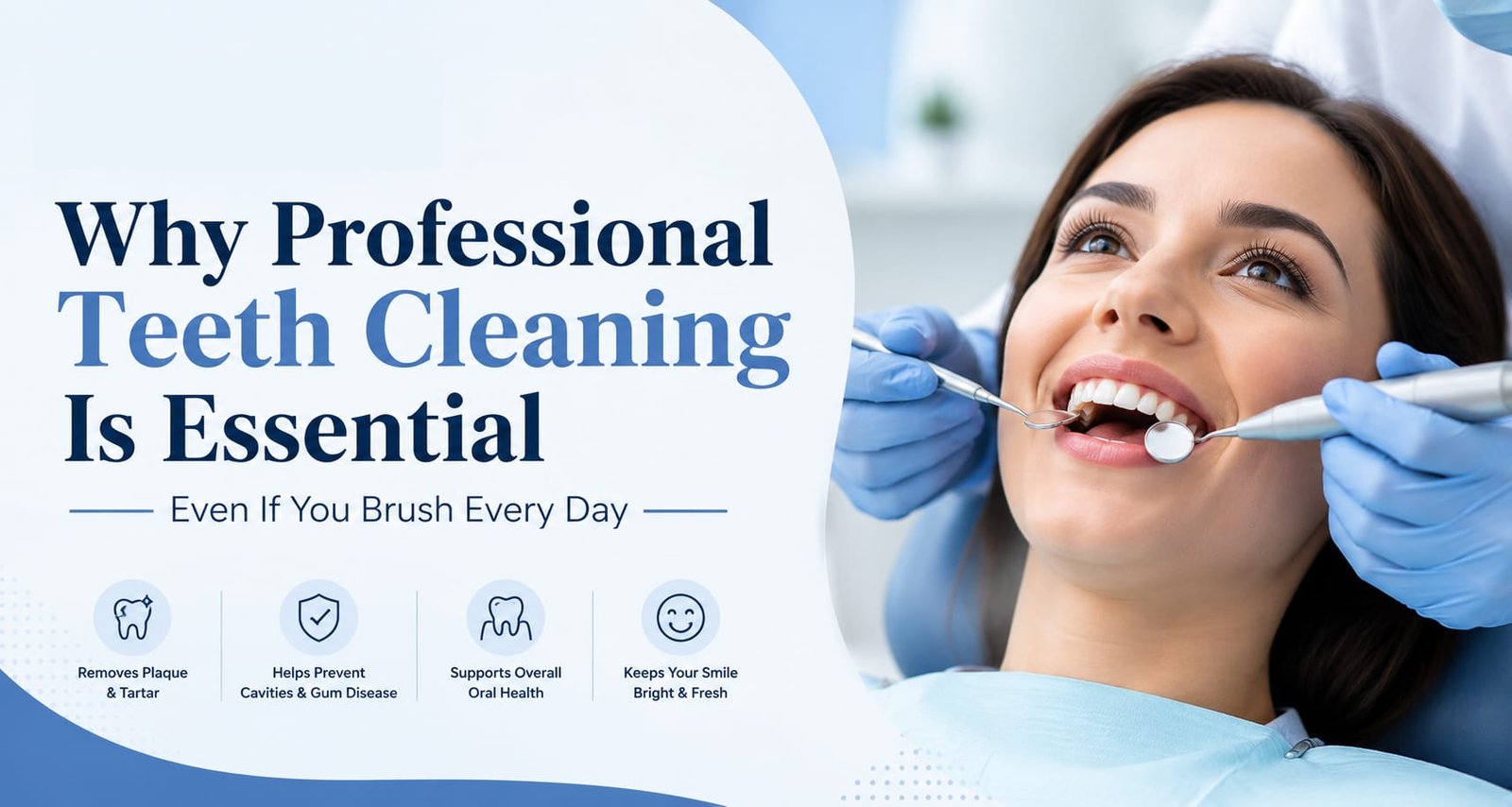
You brush every morning. Most nights too. Then your dentist says you still need Teeth Cleaning, and the reaction is almost always the same: “If I’m already brushing, what exactly are you cleaning?” It’s a fair question because brushing feels like the job should already be done.
The surprising part is this.
Your toothbrush only works on what it can still move. Once plaque hardens into tartar, no amount of careful brushing can remove it at home.
Teeth Cleaning isn’t about polishing your teeth
There is a moment during almost every appointment that catches patients off guard. They look at the tiny flakes coming off during Teeth Scaling and ask, “Was all of that really on my teeth?”
Yes.
Plaque is soft and sticky. Leave it there long enough, and minerals in your saliva gradually harden it into tartar. That rough surface becomes the perfect place for even more plaque to settle, especially around the gumline where toothbrush bristles struggle to reach.
The strange part?
Some people build tartar unbelievably fast. I’ve seen two siblings with almost identical diets, yet one needs cleaning every six months while the other barely develops any deposits in a year. Saliva chemistry is part of the story, and we still don’t fully understand why it differs so much from person to person.
That is why Professional Teeth Cleaning is less about making teeth look brighter and more about removing tartar that has been firmly attached.
Imagine cleaning a kitchen counter but never the corners
Think about the edges around your sink. You wipe the middle every day, yet grime slowly collects where the sponge never quite reaches.
Your mouth behaves in a similar way.
Between teeth, just under the gums, and behind the last molars are places where plaque quietly survives. You may not notice anything unusual until your gums begin bleeding during brushing. Most people blame the toothbrush.
Usually, it isn’t the brush.
Bleeding gums often signal inflammation caused by plaque sitting there for weeks or months. The encouraging part is that early gum inflammation—gingivitis—is often reversible once the deposits are removed and daily cleaning improves.
One detail still surprises many patients. The worst tartar isn’t always on the chewing surfaces. It’s commonly behind the lower front teeth because saliva ducts open nearby, encouraging mineral buildup in that exact spot.
Dental Cleaning Treatment does more than your mirror can show
Most people judge their teeth by color.
Dentists don’t.
A smile can look perfectly white while the gums are quietly becoming unhealthy. By the time discomfort appears, the inflammation has often been there much longer than expected. Gum disease is tricky because early stages usually don’t hurt.
Pain comes later.
During a Dental Cleaning Treatment, your dentist or hygienist isn’t simply scraping deposits away. They’re also checking for pockets around the gums, areas that trap bacteria, signs of recession, worn enamel, and tiny changes that photographs at home rarely reveal.
There is one debate worth mentioning. Some people believe everyone needs a cleaning every six months. The truth is more nuanced. Many dental organizations still recommend regular checkups, but the ideal interval depends on your gum health, medical history, smoking habits, braces, and how quickly tartar forms in your mouth.
Not everyone follows the same schedule.
That flexibility often surprises patients because they expected one rule for everybody.
Plaque and Tartar Removal is easier than treating what comes later
Here’s a situation I see more often than I’d like.
Someone postpones cleaning because nothing hurts. A year later, they return needing fillings, gum treatment, or discussing replacement options like a Dental Implant because a tooth couldn’t be saved.
Those treatments have their place.
But they’re never anyone’s first choice.
Regular Plaque and Tartar Removal doesn’t guarantee you’ll avoid future dental work. Dentistry simply doesn’t work in absolutes. Genetics, dry mouth, medications, grinding, and diet all influence what happens next. What cleaning does is remove one of the biggest factors that dentists can actually control before larger problems develop.
That difference matters.
If you’re looking for Teeth Cleaning in Rohini, ask less about polishing and more about whether the visit includes a proper gum assessment, scaling where needed, and advice tailored to your mouth rather than a standard script.
Because no two mouths age the same way.
Frequently Asked Questions
Does brushing twice a day replace professional Teeth Cleaning?
No. Brushing removes soft plaque, but hardened tartar cannot be removed with a toothbrush. Professional cleaning removes those deposits safely.
Is Teeth Scaling painful?
Most people feel pressure or mild sensitivity rather than pain. If your gums are inflamed or sensitive, your dentist may recommend local anesthesia to keep you comfortable.
How often should I get Professional Teeth Cleaning?
Many people benefit from cleaning every six months, but some need it more or less often depending on gum health, tartar buildup, smoking, braces, and medical conditions.
Will Teeth Cleaning make my teeth white?
Cleaning removes stains caused by tea, coffee, or tobacco and leaves teeth looking brighter. It doesn’t change the natural shade of your enamel like whitening treatments do.
There is something quietly reassuring about leaving a dental appointment with nothing dramatic to fix. No emergency. No surprise treatment plan. Just a cleaner mouth and a better idea of what’s happening beneath the surface.
If you’re nearby, the team at Omlesh’s Dentcity in Rohini, Sector 8 believes those ordinary visits are often the ones that save people from much bigger dental problems later.
