

Most people don’t skip flossing because they don’t care.
They skip it because brushing feels sufficient. Teeth look clean. Breath seems fine. There’s no pain. So flossing becomes something people know they should do—but rarely prioritize.
The problem is that flossing is usually ignored until damage begins, and by the time that damage becomes visible or painful, it’s no longer something flossing alone can fix.
Why Flossing Is the First Habit to Be Dropped
Flossing doesn’t give immediate feedback.
Brushing leaves teeth feeling smooth and fresh. Flossing, on the other hand:
- Feels repetitive
- Takes extra time
- Doesn’t visibly change the smile
- Often causes bleeding at first
Without instant reward, it’s easy to assume flossing is optional. Unfortunately, oral health doesn’t work on visible cues alone.
What Brushing Misses—Every Single Day
A toothbrush cleans about 60% of the tooth surface.
The remaining 40%—the sides of the teeth and the space just below the gumline—are where plaque accumulates most aggressively. These areas are:
- Too tight for bristles
- Shielded from rinsing
- Ideal for bacterial growth
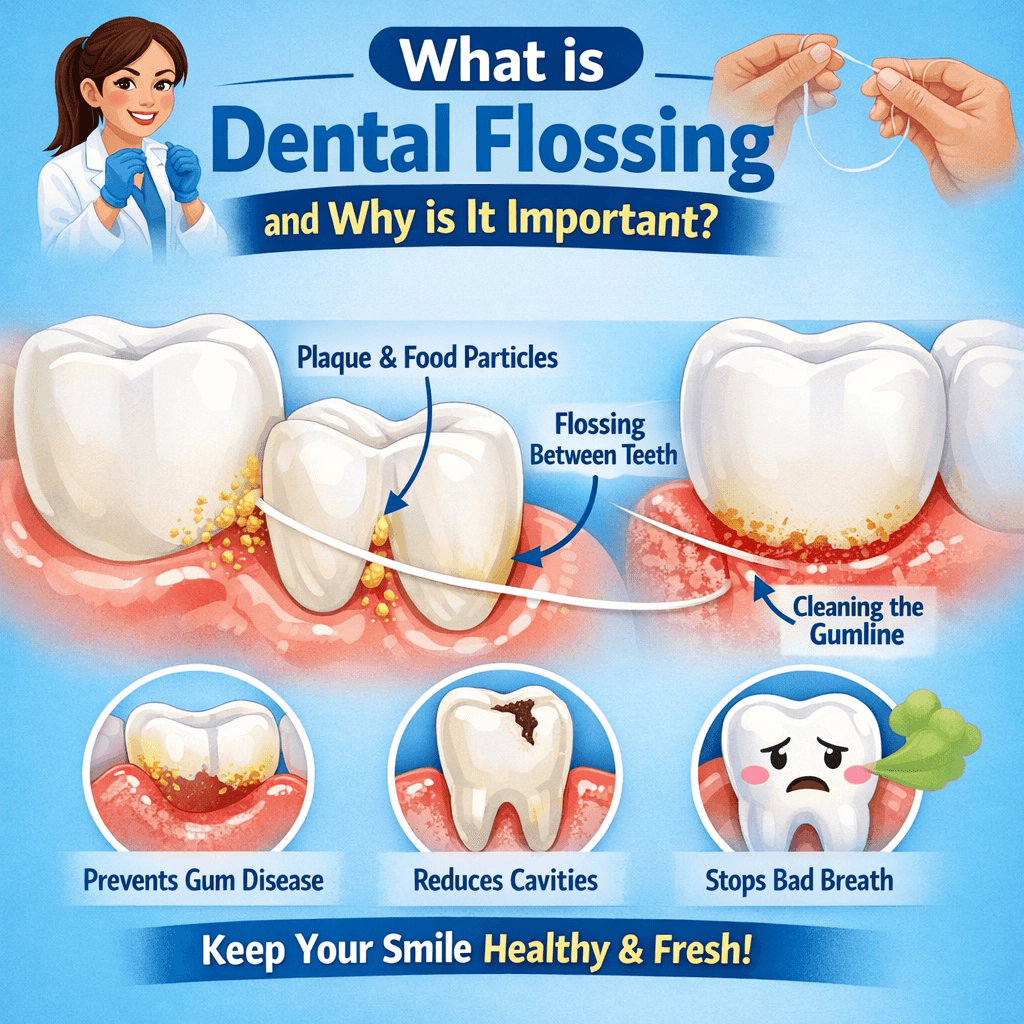
Flossing is the only routine home care method that disrupts plaque in these spaces.
Plaque Between Teeth: Quiet, Sticky, and Destructive
Plaque between teeth behaves differently than plaque on flat surfaces.
When undisturbed, it:
- Thickens quickly
- Hardens into tartar
- Irritates the gums
- Creates an environment for decay
Because it’s hidden, damage progresses silently.
Why Bleeding While Flossing Is a Warning—Not a Reason to Stop
One of the biggest reasons people avoid flossing is bleeding.
Bleeding gums do not mean flossing is harmful. They usually mean:
- Inflammation is already present
- Plaque has been accumulating for some time
- Gums are irritated and fragile
Consistent flossing reduces bleeding by removing the cause. Stopping flossing allows inflammation to worsen.
The Early Damage Most Patients Don’t Notice
The first signs of flossing neglect are subtle:
- Mild gum redness
- Occasional bleeding
- Persistent bad breath
- Slight gum tenderness
At this stage, damage is still reversible. But because there’s little discomfort, many people ignore it.
When Flossing Is Ignored Long-Term
Over time, untreated plaque between teeth leads to:
- Gum recession
- Bone loss around teeth
- Deep periodontal pockets
- Tooth mobility
At this point, flossing becomes supportive—not corrective. Professional intervention is required.
Cavities Don’t Just Form on Chewing Surfaces
Many people are surprised to learn that interdental cavities are common.
Decay between teeth:
- Is harder to detect early
- Often causes no pain initially
- Spreads faster once established
Flossing removes the plaque that causes these cavities before they start.
Flossing and Bad Breath: The Hidden Connection
Bad breath often originates between teeth, not on the tongue or tooth surfaces.
Food debris trapped between teeth:
- Breaks down slowly
- Feeds odor-causing bacteria
- Persists despite mouthwash
Flossing removes the source, not just the smell.
Why Mouthwash Can’t Replace Flossing
Mouthwash reaches surfaces—but it does not mechanically disrupt plaque.
Plaque is sticky. It must be physically removed.
Flossing provides the mechanical action that rinses cannot.
Gum Disease Often Starts Where You Don’t Look
Gum disease almost always begins between teeth.
These areas:
- Are difficult to visualize
- Rarely cause pain early
- Show damage only when advanced
By the time gums pull away from teeth, the opportunity for simple prevention has passed.
Flossing and Dental Work Longevity
Crowns, bridges, and fillings fail more often when flossing is neglected.
Plaque buildup around restorations leads to:
- Gum inflammation
- Secondary decay
- Premature failure
Flossing protects not just natural teeth, but dental investments.
“I Brush Really Well—Do I Still Need to Floss?”
Yes.
Brushing quality does not eliminate the need for flossing. Even excellent brushing cannot clean contact points between teeth.
This is not a judgment—it’s anatomy.
How Often Should You Really Floss?
Once a day is enough—when done correctly.
Consistency matters more than technique perfection.
Five focused minutes daily prevents years of treatment later.
Proper Flossing: Simpler Than Most Think
Effective flossing:
- Slides gently between teeth
- Curves around each tooth surface
- Reaches slightly below the gumline
- Avoids snapping into the gums
The goal is disruption, not force.
Alternatives for Those Who Struggle With Traditional Floss
For patients who find floss difficult, alternatives include:
- Floss picks
- Interdental brushes
- Water flossers (as a supplement, not a replacement)
The best tool is the one you’ll actually use consistently.
Why Dentists Ask About Flossing First
When dentists see gum inflammation or interdental decay, flossing habits are often the root cause.
It’s not about blame—it’s about prevention.
The Long-Term Cost of Skipping Flossing
Skipping flossing saves minutes today but costs:
- Gum treatments
- Deep cleanings
- Restorations
- Tooth loss in severe cases
Flossing is one of the few habits that offers high return for minimal effort.
Flossing Isn’t Optional—It’s Foundational
Oral care isn’t complete without flossing. Brushing alone maintains appearances. Flossing protects what you can’t see.
Ignoring flossing doesn’t cause immediate pain—but it allows damage to build quietly.
Final Thoughts: The Habit That Matters When No One Is Watching
Flossing is rarely dramatic.
It doesn’t whiten teeth overnight.
It doesn’t feel rewarding immediately.
But it quietly prevents the problems most patients wish they’d avoided earlier.
By the time flossing feels necessary, the damage has often already begun. Making it routine now is far easier than fixing what comes later.
FAQ’s
Is bleeding during flossing normal?
Bleeding usually indicates inflammation and improves with consistent flossing.
Can flossing loosen teeth?
No. Flossing removes plaque; it does not damage healthy teeth.
Is once a week enough?
No. Plaque forms daily and must be disrupted daily.
Are water flossers effective?
They help, but do not fully replace traditional flossing.
What if I’ve never flossed regularly before?
It’s never too late. Starting now still reduces future damage.
