

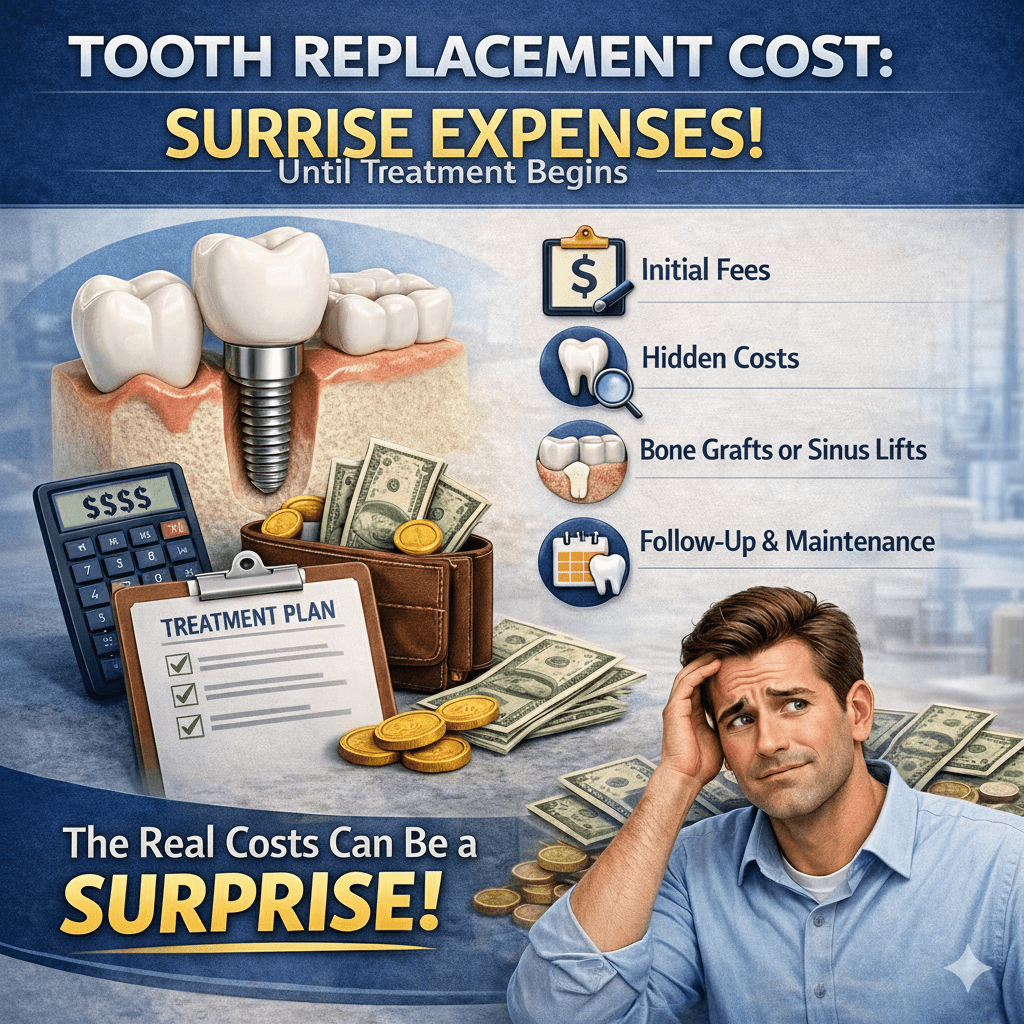
Most patients start asking about tooth replacement with one simple question:
“How much will it cost?”
It’s a reasonable question—but it’s also the one that causes the most confusion, frustration, and regret later on. That’s because tooth replacement cost is rarely just about the price of a tooth. It’s about what that tooth needs to function, last, and protect the rest of the mouth over time.
What patients usually don’t understand—until treatment begins—is that the cheapest option upfront often becomes the most expensive one long-term.
Why Tooth Replacement Feels More Complicated Than Expected
Replacing a tooth sounds straightforward. A tooth is missing. You replace it.
But teeth don’t exist in isolation. They are part of a system involving:
- Bone
- Gums
- Bite alignment
- Chewing forces
- Adjacent teeth
When one tooth is lost, the system changes. Tooth replacement is not just cosmetic—it’s structural rehabilitation.
The First Cost Most Patients Miss: What Happens If You Don’t Replace the Tooth
Many people delay replacement to avoid cost, assuming nothing urgent will happen. But the hidden cost of not replacing a tooth often exceeds the cost of treatment itself.
Over time, a missing tooth can lead to:
- Bone loss in the jaw
- Shifting of nearby teeth
- Bite imbalance
- Overloading of remaining teeth
- Gum recession
- Facial collapse in visible areas
These changes increase the complexity—and cost—of future treatment.
Tooth Replacement Options and Why Prices Vary So Widely
Patients are often surprised by the price range for tooth replacement. The reason is simple: different solutions solve different levels of the problem.
1. Dental Implants
Implants replace both the tooth and the root.
Cost includes:
- Implant placement
- Bone integration
- Abutment
- Crown
What patients often don’t realize is that implants also:
- Prevent bone loss
- Protect adjacent teeth
- Restore natural chewing force
- Offer the longest lifespan
The cost reflects long-term stability, not just the visible tooth.
2. Dental Bridges
Bridges replace the missing tooth by anchoring to neighboring teeth.
Costs vary based on:
- Number of teeth involved
- Condition of supporting teeth
- Materials used
What’s often missed:
- Healthy adjacent teeth must be altered
- Future decay or failure affects the entire bridge
- Bone under the missing tooth still resorbs
Lower initial cost, higher long-term maintenance.
3. Removable Partial Dentures
Dentures are often the most affordable upfront option.
But patients frequently underestimate:
- Comfort limitations
- Reduced chewing efficiency
- Ongoing adjustments
- Wear on remaining teeth
They solve appearance—but not function or bone preservation.
Why “Per Tooth Cost” Is Misleading
Many patients compare options based on per-tooth pricing.
This comparison ignores:
- Longevity
- Maintenance needs
- Impact on surrounding teeth
- Risk of future procedures
A replacement that lasts 5–7 years is not cheaper than one that lasts 20+ years—it’s just delayed expense.
The Hidden Costs Patients Discover Mid-Treatment
Once treatment begins, patients often encounter costs they didn’t expect—not because they were hidden, but because they weren’t understood.
Common examples include:
- Bone grafting for implants
- Gum treatment before replacement
- Temporary restorations
- Bite correction
- Replacement of failing adjacent dental work
These aren’t “extras.” They are necessary foundations for success.
Bone Loss: The Cost Most People Never Budget For
Jawbone loss begins soon after a tooth is lost.
Patients often assume bone grafting is optional. In reality, it may be required to:
- Support an implant
- Restore facial structure
- Prevent long-term collapse
Delaying replacement often increases bone loss—and treatment cost.
Why Cheaper Tooth Replacement Often Costs More Later
Many patients choose based on affordability rather than longevity.
Over time, this can lead to:
- Replacing failed restorations
- Treating damaged adjacent teeth
- Managing bite problems
- Escalating dental expenses
What seemed affordable initially becomes a cycle of repeated treatment.
Tooth Replacement Is Also About Bite Balance
Replacing a tooth isn’t just about filling a gap.
Each tooth distributes chewing forces. When one is missing:
- Remaining teeth work harder
- Uneven pressure develops
- Teeth crack or wear prematurely
Correct replacement restores balance—preventing costly damage elsewhere.
Aesthetic Expectations Also Affect Cost
Front teeth require:
- Precise color matching
- Natural translucency
- Gum contouring
- Symmetry with facial features
Achieving natural results involves skill, planning, and materials—factors reflected in cost.
Why Insurance Coverage Often Creates False Expectations
Insurance may cover part of a procedure—but rarely the full solution.
Patients are often surprised to learn:
- Coverage is based on minimum standards, not best outcomes
- Long-term solutions may receive limited support
- Preventive value is not fully considered
Treatment decisions should be based on health—not coverage alone.
The Emotional Cost Patients Rarely Consider
Beyond money, missing teeth affect:
- Confidence
- Social comfort
- Speech clarity
- Willingness to smile
Delaying replacement often carries an emotional toll that isn’t reflected in price quotes.
What Patients Usually Wish They’d Asked Earlier
After treatment begins, many patients say:
- “I didn’t realize bone loss would matter.”
- “I didn’t know this would affect other teeth.”
- “I wish I’d replaced it sooner.”
- “I didn’t understand the difference between options.”
Education—not cost—is often the missing piece.
How to Think About Tooth Replacement Cost More Clearly
Instead of asking “How much does it cost?”, better questions include:
- How long will this solution last?
- What problems does it prevent?
- What future costs does it avoid?
- How will it affect my overall oral health?
The value of tooth replacement lies in what it protects—not just what it replaces.
Choosing the Right Plan Over the Cheapest Option
The best tooth replacement plan:
- Fits your oral condition
- Aligns with long-term goals
- Minimizes future treatment
- Protects surrounding structures
Cost should be understood—not feared—but never isolated from outcome.
Final Thoughts: Tooth Replacement Cost Is About Consequences, Not Numbers
Tooth replacement cost feels high only when viewed as a single transaction.
When understood as a long-term health decision, it becomes clear that:
- Delays increase expense
- Short-term savings create long-term loss
- Proper replacement protects far more than one tooth
Most patients don’t misunderstand tooth replacement cost because they aren’t told the price.
They misunderstand it because they aren’t shown the full picture.
And by the time that picture becomes clear, treatment has already begun.
FAQ’s
Why is tooth replacement so expensive?
Because it restores function, structure, and long-term stability—not just appearance.
Is the cheapest option ever the best choice?
Rarely. Lower upfront cost often leads to higher future expenses.
Can I delay tooth replacement safely?
Delays increase bone loss and treatment complexity.
Do implants always cost more?
Initially yes—but they often cost less over time due to durability.
How do I choose the right option for me?
By understanding long-term outcomes, not just immediate pricing.
