

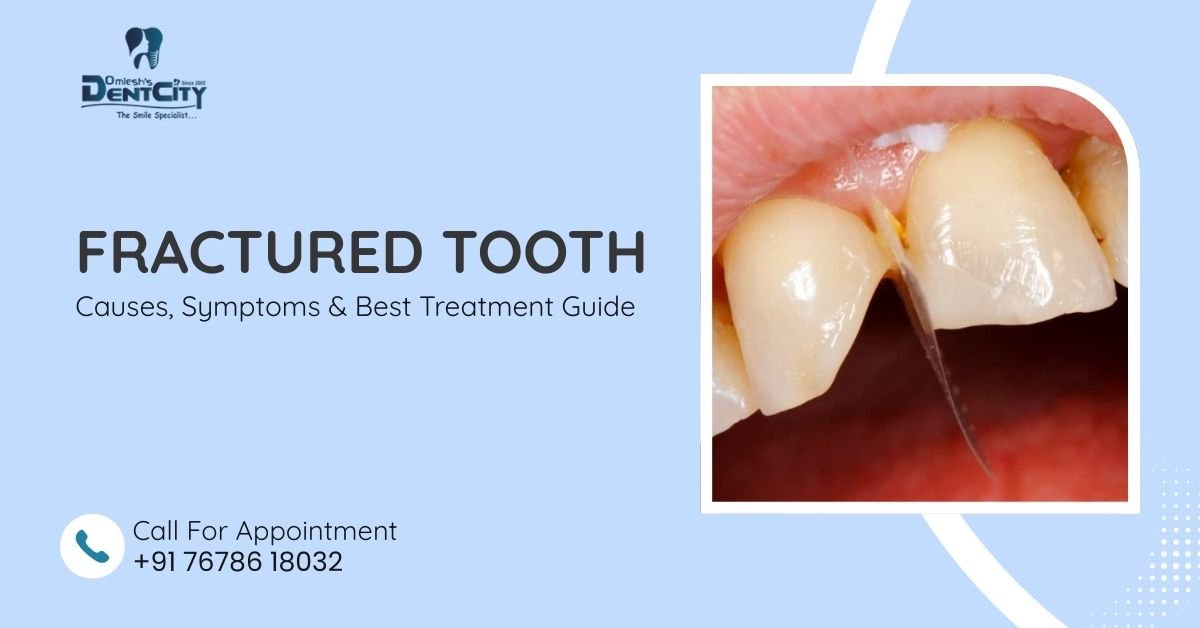
A sudden fractured tooth can instantly turn a normal day into a painful and stressful experience. Early symptoms such as sensitivity or mild pain are not taken seriously by many people. The sooner you get to know about the symptoms and possibilities of treatment, the better. The more you will be able to save your natural tooth and prevent additional complications.
Here, we have provided you with a stepwise guide on all that you need to know about cracked tooth syndrome. Treating emergencies, the ways of repairing a broken tooth, how much it costs, and the long-term prevention of this syndrome.
What Causes Tooth Fractures?
The fracture of a tooth may occur due to several reasons. The accidents are not rare, but a lot of people get cracks as a result of their daily habits.
1. Trauma or Accidents
A cracked tooth in half, cut edges, or deep fractures can develop as a result of physical harm in sports, falls, and even road accidents.
2. Biting on Hard Foods
A sharp, unforeseen tooth chipping or a crack can be caused by ice cubes, nuts, hard candies, and unexpected stones in food.
3. Teeth Grinding
Constant pressure from grinding weakens enamel and leads to damage to tooth enamel, making teeth more prone to cracks.
4. Large Cavities or Fillings
Teeth can crack when they are extensively carious or have huge fillings, making the tooth prone to fracture.
5. Age & Natural Wear
With old age, there is a possibility of enamel being thinner, which predisposes the chances of cracked tooth syndrome.
Types of Tooth Fractures
There are various kinds of cracks that need multiple forms of treatment. Here are the most common ones:
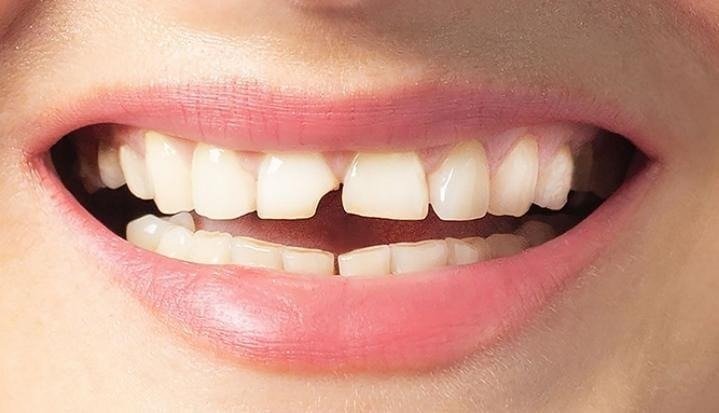
1. Minor Chips
A microscopic crack in the enamel, which is usually painless, but also requires a tooth repair to avoid the condition getting worse.
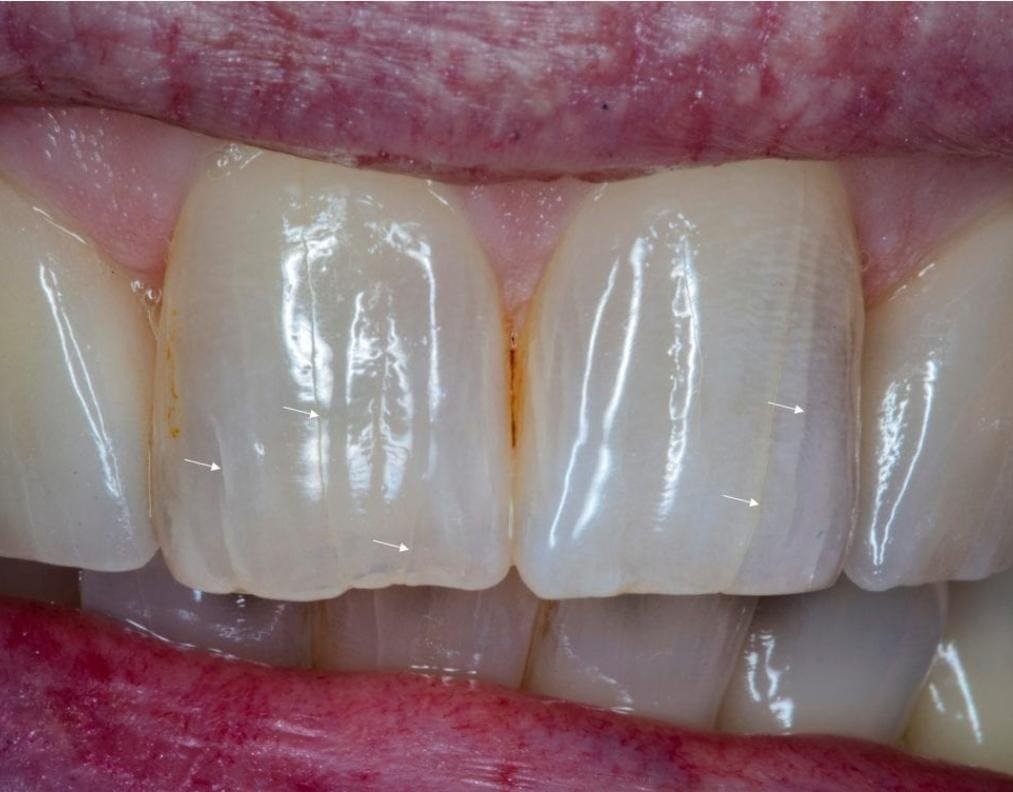
2. Craze Lines
Cosmetic cracks on the enamel—more cosmetic than pathological.
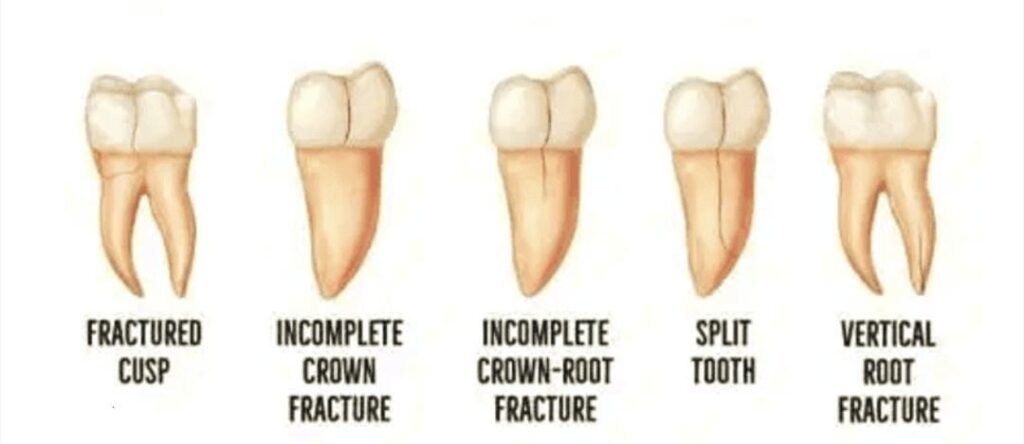
3. Fractured Cusp
A fragment of the chewing surface is lost, which is usually observed in tooth with old fillings.
4. Cracked Tooth (Extending Vertically)
It is a severe form of a fractured tooth in which the crack moves towards the root.
5. Split Tooth
A severe fracture in which the tooth splits into two parts.
6. Vertical Root Fracture
Starts at the base and runs upwards—commonly identified at a later stage.
What To Do Immediately After a Tooth Crack
The tooth can be rescued by fast response.
Step-by-step emergency tips:
- Wipe the mouth using water.
- Use a cold compress in case of swelling.
- It is necessary not to chew on the affected side.
- Take some pain medications (over the counter).
- See a dentist as soon as possible.
Not paying enough attention to a crack may allow bacteria to get in and trigger the process of infection, further fractures, and loss of teeth.
How Dentists Diagnose a Cracked Tooth
Dentists use:
- Dental X-rays
- Transillumination (light test)
- Bite tests
- 3D scans (CBCT)
- Visual examination
Some cracks are so fine that even X-rays don’t show them. Experienced dentists use multiple tests to identify cracked tooth syndrome accurately.
Cracked Tooth Treatment Options
The treatment of your fractured tooth would be based on how severely the tooth is fractured. The most effective ones are listed below:
1. Dental Bonding
Ideal for small chips. The missing portion is replaced using a tooth-colored resin.
2. Dental Crown
The most common cracked tooth fix is done using a crown in case of small to medium cracks. It ensures the protection of the tooth and gives it strength.
3. Root Canal Therapy
In case of cracks extending up to the pulp, an RCT can be required to rescue the tooth.
4. Veneers
Cosmetic procedure to treat a minor fracture in the front teeth.
5. Extraction
In severe cracks when the tooth can not be retained, it has to be removed.
Fractured Tooth Repair Cost / Cracked Tooth Repair Cost
The cost of the fractured tooth repair or the price of the cracked tooth repair is dependent on the nature of the treatment, its location, and the degree of damage.
- Bonding: Affordable
- Fillings: Medium cost
- Crowns: Moderate to high
- Root Canal + Crown: Higher cost
- Extract + Implant/Bridge: The most costly one.
How to Prevent Cracked and Fractured Teeth
It is always better to prevent than to cure. To avoid harm to the enamel of the tooth, follow these tips to take care of your enamel:
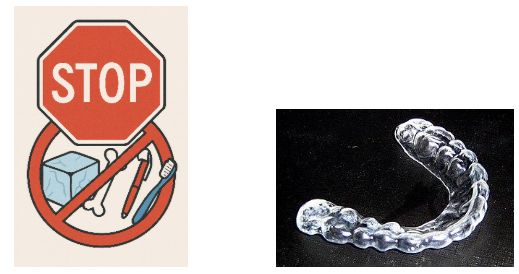
- Avoid chewing on things like ice, hard bones, pens, etc.
- Wear a mouthguard in case you are a tooth grinder or a sportsperson.
- Have frequent oral examinations.
- Early treatment of cavities prevents cavities in a tooth.
- Enhance the condition of the oral hygiene to strengthen the enamel.
When Should You See a Dentist?
You are also supposed to visit a dentist in case you observe:
- Tooth pain (particularly on chewing) suddenly appearing.
- Cracks or depletion of enamel.
- The protracted sensitivity is more than 23 days.
- Swelling around the gums
- A piece of the tooth breaks off
Why choose Omlesh’s DentCity
Omlesh’s DentCity gives safe, expert care for fractured or damaged teeth. The team uses modern tools, quick treatments, and gentle methods. You get trusted results, less pain, and long-lasting dental relief. A broken tooth is not only an aesthetic issue; it is an indicator that your teeth are not as healthy as they should be. Not only can you take care of your natural teeth and prevent complications with the timely diagnosis, correct treatment, and preventive care, but you can also save your oral health in the long-term perspective. This is because paying attention to early cracks in your tooth will save your tooth as well as save you the high cost of having your tooth repaired in the future.
