

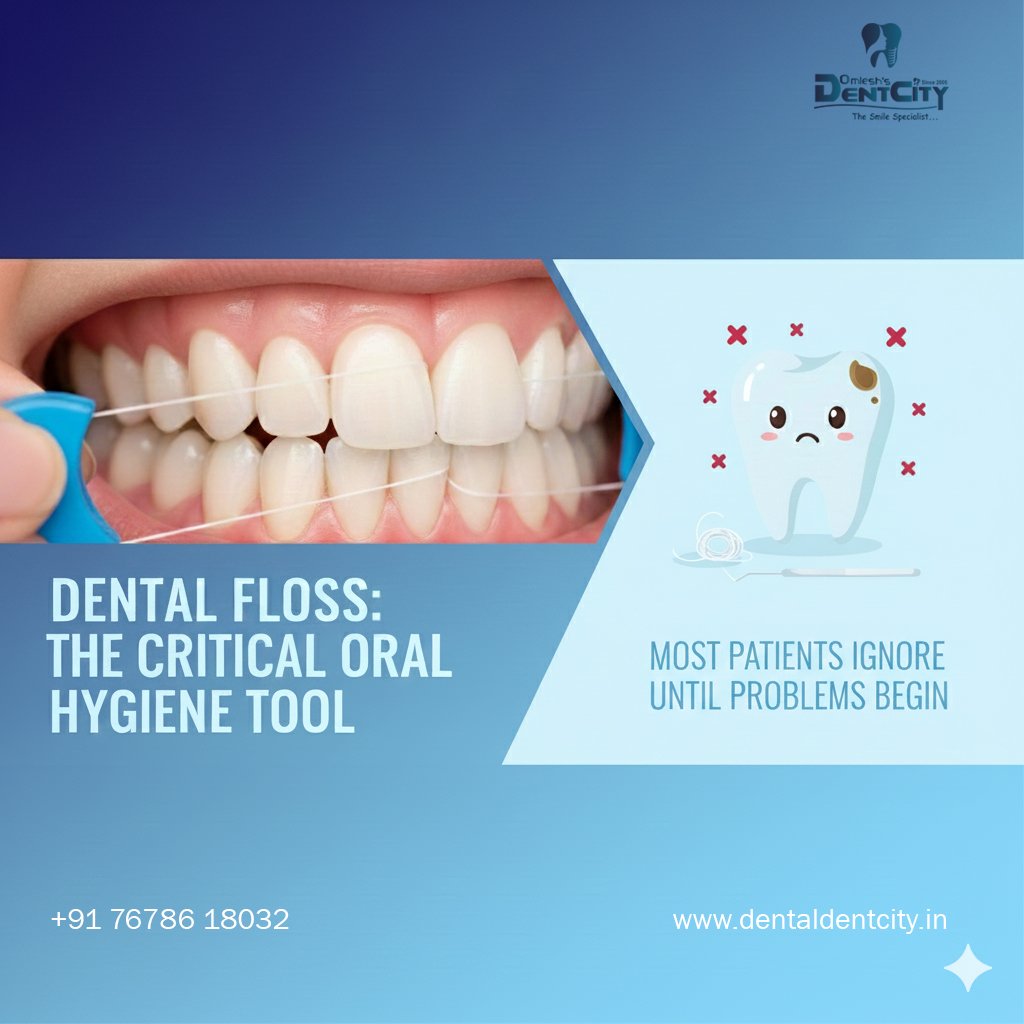
Most people think their teeth are clean because they brush every day. But some parts of the mouth are easy to miss. Food and plaque often stay stuck between teeth and near the gums. A toothbrush cannot reach these tight spaces well. Over time, bacteria grow there and slowly start harming the gums and teeth, even before any pain is noticed.
Studies show that brushing alone only gets rid of about 60% of plaque. You need to floss to clean the other 40%. This is why dental floss is a must-have for keeping your gums and your mouth healthy over time.
Why problems happen even if you brush your teeth every day
Dentists often see patients who brush their teeth every day but still get gum swelling, bleeding, bad breath, and cavities between their teeth. This happens due to a chain reaction that develops over time:
- Food gets stuck between teeth.
- Bacteria grow and make acids. Bacteria multiply in these trapped areas and produce acids that damage the gums and enamel.
- Gums get irritated and swollen.
- Plaque turns into tartar in 36 hours.
- The infection eventually spreads deeper into the supporting bone around the tooth.
Damage has already gotten worse by the time symptoms show up. Flossing stops this chain reaction by getting to the exact spots where gum disease starts.
What Dental Floss Does That Other Products Can’t
Brushing cleans the visible parts of your teeth, but it doesn’t reach the tight gaps where plaque quietly builds up. Mouthwash can rinse away loose bacteria for a while, yet it cannot remove the sticky film that clings between teeth and along the gumline. Those hidden areas are exactly where flossing matters most.
How dental floss helps in ways other products cannot
- Pulls out trapped food and plaque from between teeth
- Reaches below the gumline where brushes and rinses fail
- Breaks plaque apart before it hardens into tartar
By removing plaque early, flossing helps keep gums calm and healthy, lowers the risk of gum disease, and prevents long-term damage. It also improves breath and supports tooth stability by protecting the gums that keep teeth firmly in place.
Choosing the Right Product: Understanding the Types of Flossers
Many people try flossing but stop because the product they picked doesn’t feel right. Some floss feels too tight, some hurts the gums, and some frays or snaps easily. When flossing feels uncomfortable, the habit usually fades. The goal is not to force flossing, but to choose a flosser that suits your teeth and gums so it feels easy and natural to use.
Each type of flosser serves a different need:
- Waxed floss Works well for people with tight spaces between their teeth. It slides more easily and is less likely to tear.
- Unwaxed floss
- A good choice if your teeth are more evenly spaced and you want extra grip to remove sticky plaque.
- Flavored floss works well for children and for anyone who wants a more enjoyable flossing experience along with fresher breath.
- If your teeth are sensitive or there is more space between them, dental tape is usually the most comfortable option. Its flat and soft ribbon shape fits gently between the teeth without scratching or hurting the gums.
- For people who wear braces, have bridges, or dental implants, super floss works much better than regular floss. It has a firm end that helps thread the floss around the dental hardware, and the soft, spongy middle cleans the area properly without causing discomfort.
- Floss picks are great for people who want something easy and convenient to use, like beginners or busy adults who need to get it done fast.
- Water flossers are an excellent option for seniors and patients with gum disease, providing deep cleaning with gentle water pressure instead of friction.
IMPORTANT NOTE: Toothpicks should not be used for cleaning between teeth, as they can injure the gums and surrounding soft tissues, leading to irritation, bleeding, and potential infection.
When patients choose a flosser that matches their dental needs, flossing stops feeling like a chore and becomes a simple step in their daily routine. Comfort leads to consistency — and consistency leads to healthier gums, fresher breath, and fewer dental problems later.
Practical Uses of Flossers That Improve Real-Life Results
Flossing isn’t just another dental rule — it makes day-to-day life easier. When someone flosses regularly, they usually notice small but meaningful improvements:
- Bad breath fades because the bacteria hiding between teeth are removed instead of just covered up.
- Gums bleed less over time as the irritation slowly settles down.
- Braces and orthodontic appliances stay protected because flossing removes plaque before it builds up around brackets and wires, where brushing alone often can’t reach.
- Dental work such as crowns, veneers, bridges, and implants lasts longer when the edges around them stay clean.
- Whitening looks better and lasts longer when plaque isn’t blocking the surface of the teeth.
Healthy gums and cleaner teeth naturally lead to a more confident smile.
Habit-Building Approach That Works for Most Patients
Many people stop flossing because they feel they need to do it perfectly from day one. The truth is, flossing doesn’t have to be all-or-nothing. A gradual approach works far better and is easier to maintain.
Start small by flossing a few teeth each night. As your gums adjust and the process feels more comfortable, slowly increase the number of teeth you floss. Over time, flossing all your teeth becomes quick, comfortable, and a natural part of your daily routine—without stress or pressure.
Financial Impact: Prevention Is More Affordable Than Treatment
Flossing may feel like a small habit that takes extra time, but its long-term impact on dental health and costs is significant. People who rely only on brushing often experience more dental issues over time. In contrast, those who combine brushing with flossing tend to maintain better oral health and avoid many costly treatments.
| Oral Care Routine | Long-Term Outcome (10+ Years) |
Brushing only | Higher risk of cavities between teeth, more frequent deep cleanings, possible root canal treatments, and in some cases, tooth loss |
Brushing + Flossing | Healthier gums, fewer dental procedures, and significantly lower treatment costs |
A small daily practice prevents high-cost corrective procedures in the future.
Final Takeaway for Patients
Preventive care is not about avoiding dental visits; it’s about avoiding dental regret. Most people brush every day, but brushing alone only cleans the surface that you can see. Harmful bacteria and plaque settle in the hidden spaces between teeth — the areas your toothbrush simply cannot reach. That is where floss becomes essential.
Daily flossing protects the gums and teeth from silent damage that develops slowly and painlessly until it becomes a serious problem. You protect the following with just a minute of work every day:
- Your comfort—by stopping gum inflammation and tooth sensitivity
- Your confidence will grow as your breath gets fresher and your smile gets healthier.
- Your long-term oral health, which means you won’t need as many expensive dental treatments in the future
Flossing isn’t just something dentists tell you to do; it’s a way to keep your natural teeth strong, healthy, and pain-free for the rest of your life.
FAQ’s
Q.1 My gums bleed when I use dental floss. Should I stop now?
A.1 No. If your gums bleed, it means they are inflamed. Bleeding usually stops within a week if you floss every day.
Q.2 How long should you floss?
A.2 Two minutes is ideal, but even one minute is helpful. The key is to clean all the spaces between your teeth—thorough coverage matters more than the exact time spent.
Q.3 Do kids need to floss?
A.3 Yes. As soon as two teeth touch, kids should start flossing.
Q.4 Can mouthwash take the place of flossing?
A.4 No. Plaque can’t be removed from between teeth with mouthwash, and mouthwash can’t stop tartar from forming.
Q.5 What kind of flosser is best for gums that are sensitive?
A.5 Dental tape and water flossers are both gentle choices that are good for people with sensitive teeth.
