

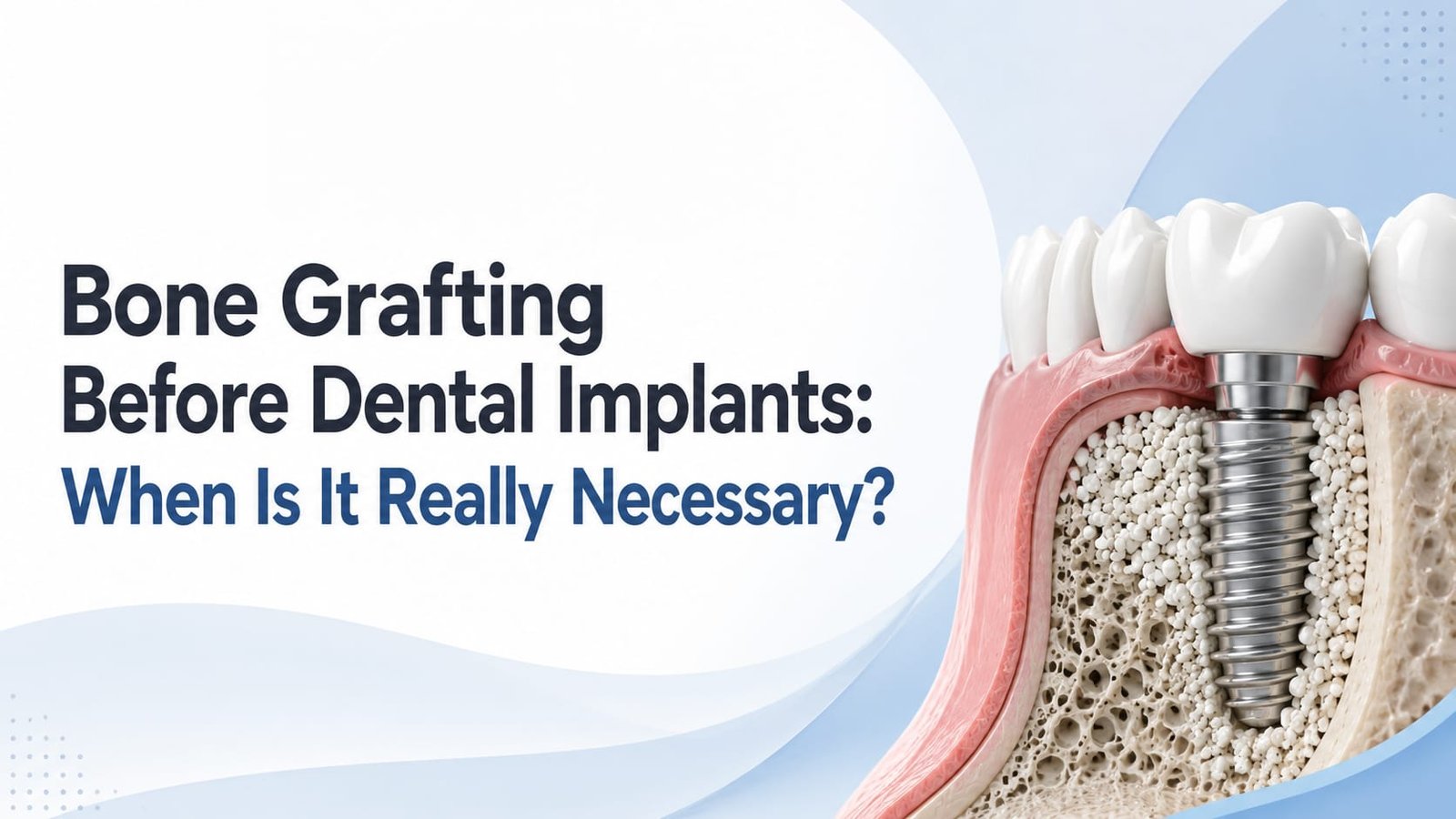
A surprising number of people walk into my clinic convinced they need bone grafting because they lost a tooth years ago. Sometimes they’re right. Sometimes they aren’t. The strange part is that two patients can lose the same tooth, wait the same amount of time, and end up needing completely different treatment before a Dental Implant is placed.
The jawbone doesn’t behave like concrete.
Once a tooth disappears, the bone that supported it slowly starts shrinking because it no longer has a job to do. How much it shrinks depends on genetics, gum health, smoking habits, infections, and a handful of factors that aren’t always predictable.
I’ve seen patients lose surprisingly little bone after ten years.
I’ve also seen significant changes in less than twelve months.
Sometimes the Bone Looks Fine Until You See the Scan
Many patients expect me to know immediately whether they need a graft. They open their mouth, point to the missing tooth, and ask for an answer before they’ve even sat down properly.
That’s understandable.
What people see in the mirror isn’t what matters most.
A Dental Implant needs enough width and height of bone to stay stable for years. The gums may look healthy, and the ridge may appear normal, but a CBCT scan often tells a different story. I’ve had cases where the gum looked perfectly full from the outside while the underlying bone was thin enough that placing an implant would have been risky.
The weird part is this: bone loss often hides in places patients never notice.
One side of the ridge can disappear faster than the other.
That’s why treatment planning relies heavily on imaging rather than appearances.
Bone Graft for Dental Implants Isn’t Automatically Required
A lot of online content makes it sound like every implant patient needs grafting first. That simply isn’t true.
Some people have excellent bone volume even after years of tooth loss. Others lose a tooth and receive an implant within a few months, before significant shrinkage has occurred. In those situations, a graft may add little benefit.
Not every missing tooth creates a problem.
The goal isn’t to perform more procedures.
The goal is to create enough support for a long-lasting Dental Implant. If the existing bone already provides that support, many surgeons prefer to keep things simple.
Patients are often surprised by this because they assume more treatment means better treatment. Dentistry doesn’t always work that way.
Sometimes doing less is smarter.
Here’s Where Dental Implant Bone Loss Treatment Changes the Conversation
Imagine someone who lost a molar because of a long-standing infection. The infection damaged surrounding bone before the tooth was removed, and then additional bone disappeared during healing.
Now the situation changes.
A Dental Implant may still be possible, but the foundation isn’t what it once was.
Dental Implant Bone Loss Treatment is really about rebuilding support where support has been lost. Depending on the defect, the graft might be placed months before implant surgery or at the same appointment.
The timing varies.
What surprises many patients is that bone grafting doesn’t “grow” bone in the way people imagine. The graft acts more like a scaffold. Your body gradually replaces or incorporates that material while creating new living bone around it.
Even among specialists, opinions differ slightly regarding the best graft materials for certain cases. Research supports several approaches, and patient-specific factors often influence the decision.
That’s medicine.
Not every question has one perfect answer.
A Dental Bone Augmentation Procedure Can Be Small—or Surprisingly Complex
The phrase Dental Bone Augmentation Procedure sounds intimidating. Patients often picture major surgery.
Sometimes it is.
More often, it isn’t.
A minor graft placed into a small defect may take less time than a root canal appointment. Patients are frequently surprised by how uneventful recovery feels.
Then there are larger cases.
When someone has worn a denture for many years, the jawbone may become extremely thin. In these situations, rebuilding enough bone for a Dental Implant can require more extensive techniques and longer healing periods.
One observation I’ve noticed repeatedly: patients worry most about the graft itself, but the actual challenge is usually patience. Bone healing follows its own schedule. You can’t rush biology no matter how badly you want teeth finished before a wedding or family event.
The calendar doesn’t negotiate.
Dental Implant Success Starts Long Before the Implant
People often think the implant is the star of the treatment.
It isn’t.
The bone matters first.
A beautifully designed implant placed into inadequate bone has a harder road ahead than a standard implant placed into healthy, stable bone. That’s one reason experienced clinicians spend so much time evaluating anatomy before discussing implant brands or implant sizes.
What most patients miss is that successful treatment planning sometimes means delaying treatment.
Not because something went wrong.
Because healing time is part of the treatment.
In many cases, waiting a few extra months for a graft to mature can make the final outcome more predictable than trying to move too quickly.
Frequently Asked Questions
Does every Dental Implant require bone grafting?
No. Many patients have enough existing bone for implant placement without any grafting. A scan determines whether additional support is needed.
How do I know if I’ve lost too much bone?
You usually can’t tell by looking. A CBCT scan provides the most accurate assessment of bone height and thickness.
Is a Bone Graft for Dental Implants painful?
Most patients report mild discomfort rather than significant pain. Recovery depends on the size and location of the graft.
How long does a Dental Bone Augmentation Procedure take to heal?
Small grafts may heal within a few months, while larger augmentations can require six months or longer before implant placement.
The detail people often overlook is that bone grafting isn’t really about replacing what was lost yesterday. It’s about giving your future Dental Implant a place where it can remain stable for years. Those are two very different goals.
If you’re considering implants and aren’t sure whether grafting is necessary, a proper clinical examination and 3D scan usually answer the question far more accurately than anything you read online. At Omlesh’s Dentcity in New Delhi, that’s where the conversation normally begins.
