

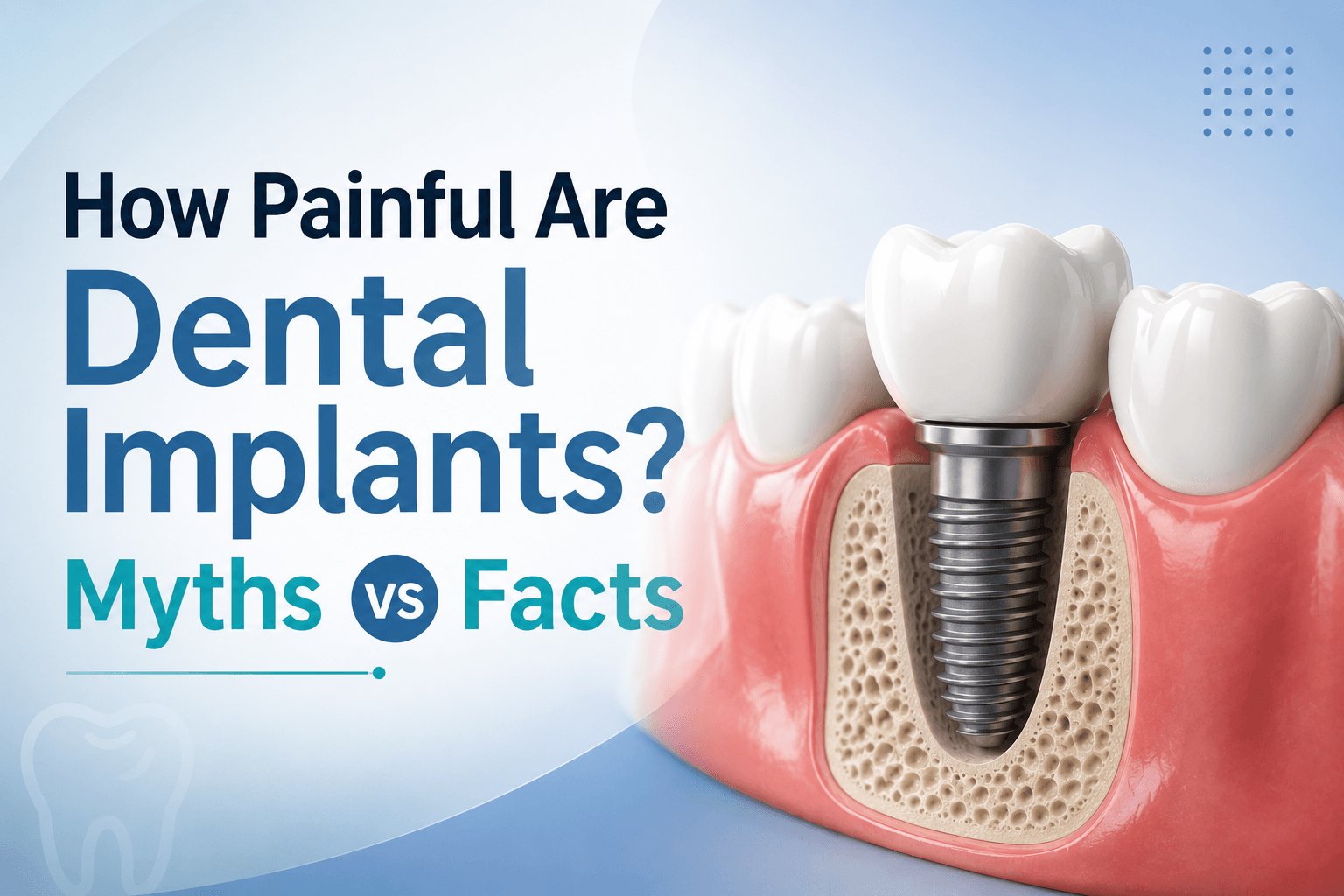
People usually lower their voice before asking this.
Not “How long will it take?” or “Will it work?” — but how painful are dental implants, really. Because somewhere along the way, implants became linked with drills, swelling, and horror stories from someone’s cousin who “couldn’t eat for two weeks.” The anxiety before the procedure is often worse than the procedure itself. But, however, patients at Omlesh’s dentist experience the opposite.
The strange part? Tooth removal often hurts more than the implant
A healthy tooth is stubborn. It has nerves, pressure fibers, inflammation if it’s infected, and sometimes years of hidden damage beneath the surface. By the time someone needs a single tooth implant at Omlesh’s Dentcity, the painful part has usually already happened long before they walk into the clinic.
Implants are different.
The area is numbed deeply.
The modern implant motors don’t sound like the old dental drills people remember from childhood. They’re quieter, smoother, still uncomfortable for anxious patients, but not usually painful during the procedure itself.
One thing surprises people every time.
The pressure feels stranger than the pain. Patients often say, “I could feel movement but not actual pain,” which sounds impossible until you experience local anesthesia properly working.
That’s where a lot of the dental implant pain myths vs facts confusion begins. People hear “bone surgery” and imagine sharp pain during treatment. Bone actually has fewer pain receptors than inflamed gums or infected teeth.
After the numbness wears off, it becomes more like soreness after a gym workout in one side of the jaw. Not pleasant, but manageable for most people with prescribed medicines and cold compresses.
Not always painless, though.
Anyone promising zero discomfort is overselling it a little.
How Painful Are Dental Implants During Recovery?
By day three, you usually know how recovery is going.
The first 24 hours are mostly about swelling control. Ice packs, soft food. Avoiding the temptation to “check” the area with your tongue every thirty seconds. Humans do that constantly after dental work. Children and engineers do it the most, oddly enough.
Most swelling peaks around the second day.
Then it settles.
Patients expecting unbearable pain are often confused by how normal the healing feels. They’ll say things like, “That’s it?” while still holding the painkillers they never ended up needing.
Recovery depends on the starting condition more than the implant itself. A clean case with healthy bone heals differently from someone who had infection, smoking habits, diabetes, or bone grafting done together.
That changes everything.
And honestly, the internet mixes all these situations together. Someone getting one straightforward implant is not having the same experience as a person getting full-mouth surgery with grafts and sinus lifts. Yet online videos rarely explain the difference.
That’s why dental implant recovery and healing stories vary so wildly.
Some patients return to office work the next day. Others need a weekend. The body decides part of this, not just the dentist.
Pain fear usually comes from old dentistry memories
A lot of adults still carry dental memories from the 90s.
Metal trays, Harsh vibrations. Injections that felt like someone stapling the gums. Dentistry changed faster than public perception did, which is why many people searching for Painless Dental Implants are often reacting to fears that aren’t even current anymore.
Technology helped.
Training helped more.
An experienced implant dentist at omlesh’s dentcity knows that patient comfort is partly technical skill and partly pacing. Rushed dentistry feels painful even when anesthesia is correct. Calm dentistry changes the whole experience.
There’s another thing patients rarely expect.
The sound in your head feels louder than the actual procedure looks from outside. Bone vibration travels through the skull differently. It can create the illusion that something dramatic is happening when, clinically, the things are controlled and gentle.
That sensory mismatch scares people.
Not necessarily the pain itself.
Sedation can help some patients, especially severe gag reflex cases or people with panic around dental treatment. But many patients who think they’ll “need sedation for sure” end up comfortably finishing treatment with only local anesthesia.
Human expectations are strange like that.
The real discomfort often comes afterward — from habits
Brushing too hard near the implant site causes more problems than careful cleaning ever does. People become protective around healing areas and accidentally stop cleaning properly altogether.
Then inflammation begins.
Food also matters more than patients expect. Hot spicy meals on the first night after surgery are a terrible idea, though people still do it surprisingly often in Delhi summers because “khichdi feels too depressing.”
That line comes up a lot.
Smoking delays healing noticeably. Not always dramatically, but enough that implant dentists can often predict slower recovery before even examining the mouth.
And sleep matters more than advertised.
Patients who sleep flat immediately after surgery usually wake up puffier the next morning. Slight head elevation helps reduce swelling. Small detail, Big difference.
A good advanced dental implant treatment clinic spends more time explaining aftercare than selling the procedure itself. Because implants usually fail slowly, through neglected healing habits rather than one dramatic mistake.
That part doesn’t make flashy social media content.
But it’s true.
Sometimes the fear disappears the moment treatment starts
There’s a moment that dentists often notice.
The patient walks in tense, shoulders raised, asking three times whether it will hurt. Then halfway through the procedure, they relax because their brain realizes the scary thing that they imagined isn’t actually happening.
You can see it physically.
Hands unclench. Breathing slows. Some patients even fall asleep during longer implant sessions, which sounds absurd until you’ve worked in dentistry long enough.
Fear is loud beforehand.
Reality usually isn’t.
That doesn’t mean implants are casual treatment. They still require planning, scans, bone evaluation, and good long-term maintenance. But the public image of implants being brutally painful is outdated compared to what modern dentistry actually feels like now.
Especially in well-planned cases.
At Omlesh’s Dentcity, the conversations about implants rarely end with patients saying, “That was unbearable.” More often, they say, “I wish I had done this earlier.”
And dentists hear that sentence constantly.
Frequently Asked Questions
Are dental implants more painful than root canals?
Usually no. Many patients describe implant surgery easier than treating an infected tooth because the area is completely numb and there’s less inflammation involved during the procedure
How long does implant pain last?
Most soreness improves within 3–5 days. Mild tenderness can continue for a couple of weeks, especially while chewing.
Can I go to work after getting a dental implant?
Many people return the next day for simple implant cases. Larger surgeries or multiple implants may need extra recovery time.
Is a dental implant painful years later?
A healthy implant should not hurt. Pain later on usually signals infection, bite pressure problems, or gum inflammation that needs evaluation.
Some people avoid implants for years because they imagine one terrible day of pain. Then they continue living with a missing tooth that affects chewing, confidence, and the teeth around it every single day after that.
Funny trade-off, really.
Modern painless tooth replacement treatment is less about “toughing it out” and more about careful planning, good anesthesia, and patience during healing. Dentistry got quieter over the years. Patients just haven’t fully caught up to that yet.
