

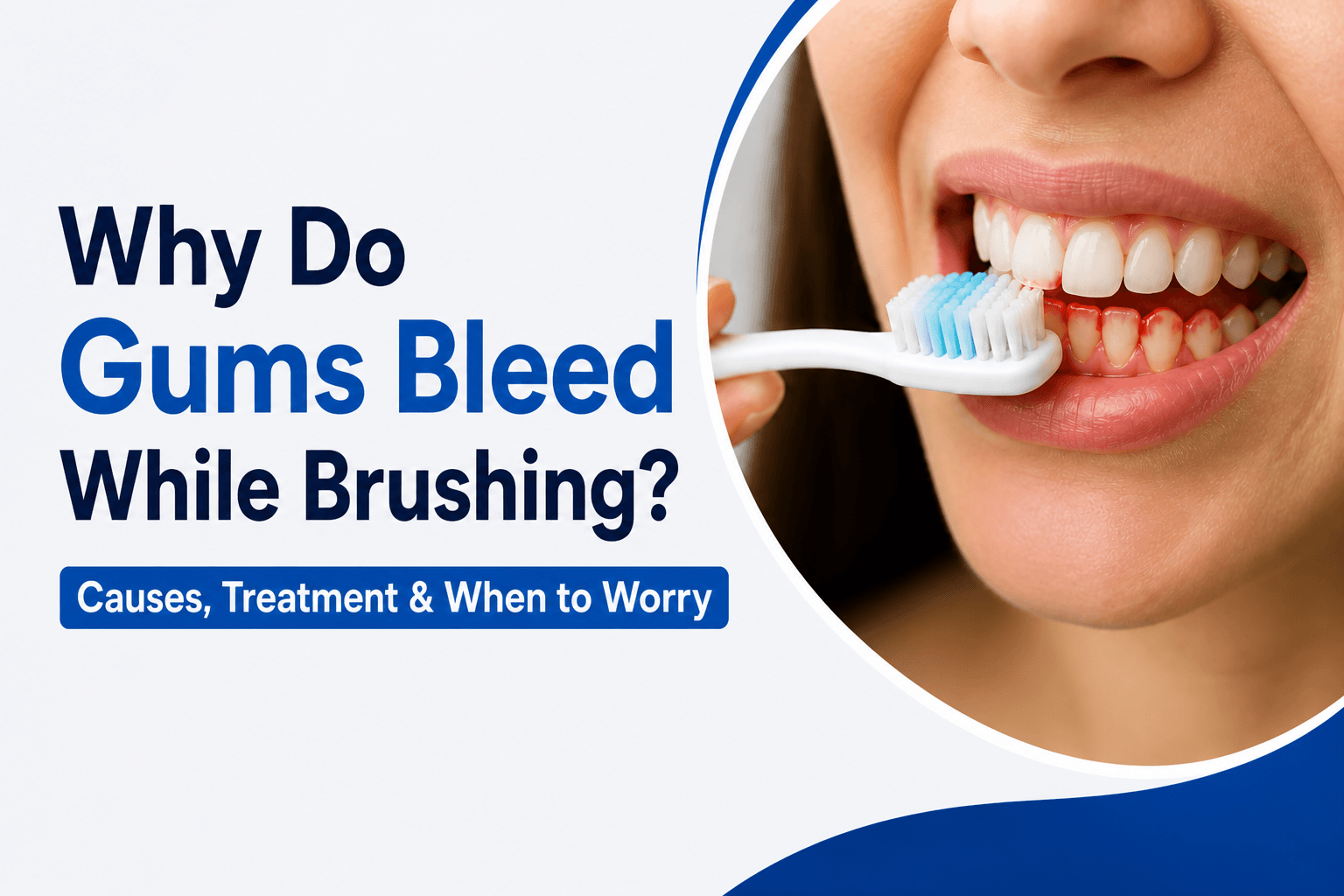
You’re brushing like you always do, and then—there it is. Pink foam in the sink.
Most people tell themselves it’s nothing, maybe they brushed too hard, but bleeding gums while brushing is one of those signs your mouth gives early and quietly.
It usually starts long before you notice it
Here’s what makes gum problems sneaky — they don’t announce themselves. You don’t wake up with pain. You just see a little blood one day, ignore it, and then it becomes normal.
After a few weeks, the gums look slightly puffy.
Not dramatic. Just… different.
Plaque is the main reason. It sits near the gumline, hardens into tartar, and your gums react to it like a splinter they can’t remove.
The strange part?
Many patients with bleeding gums while brushing actually think their teeth are clean because they brush daily.
Brushing harder isn’t the fix — it’s often the trigger
Brushing harder doesn’t clean better. It just irritates tissue that’s already struggling.
What most people miss is this — gums don’t bleed because they’re weak, they bleed because they’re inflamed. Pressing harder is like scrubbing a wound and expecting it to heal faster.
I’ve seen patients switch to “extra hard” brushes thinking it’ll solve things.
It usually makes it worse.
That’s one of those habits no one questions until damage shows up.
Why do gums bleed while brushing even if you brush daily?
That question comes up almost every day in the clinic.
Twice-a-day brushing sounds like a solid routine. But how you brush matters more than how often.
A lot of people brush the visible parts of teeth and miss the gumline completely. That’s where plaque sits. That’s where inflammation begins.
There’s also flossing — or the lack of it.
And yes, the evidence around flossing has been debated over the years, but clinically, when people start cleaning between teeth properly, bleeding reduces.
Not instantly. But noticeably.
Another quiet factor is mouth breathing at night. It dries out gums, and dry tissue is easier to irritate.
Small things add up.
Bleeding gums treatment isn’t always what people expect
Most people assume treatment means medication. It usually doesn’t.
The first step is cleaning — professional scaling. Removing tartar changes everything because you’re finally taking away the cause, not just managing the symptom.
Gums often bleed more during the first cleaning.
That scares people.
But that bleeding is actually a sign of inflammation being disturbed, not damage being done.
After that, healing starts surprisingly fast. Within a week or two, most mild cases settle down if oral hygiene improves.
In some cases, especially long-standing ones, deeper gum treatment is needed. That’s when things get more technical.
But most people never reach that stage.
How to stop bleeding gums without overthinking it
Start simple. Really simple.
Switch to a soft-bristle brush. Angle it slightly toward the gums. Don’t rush through it like a task you’re trying to finish.
Take your time.
What works better than force is consistency. Gentle brushing, done properly, twice a day, every day.
Flossing helps — even if you don’t do it perfectly at first.
Gums bleed more when you start. Then less.
That transition tells you something is changing.
There’s also diet. Vitamin C deficiency still shows up more often than people expect, especially in patients who skip fruits regularly.
Not everything is about brushing.
When bleeding gums while brushing is not something to ignore
Ten percent of adults have more advanced gum disease than they realize.
If bleeding continues for weeks despite better brushing, something deeper is going on. That could be periodontitis — where bone support starts getting affected.
Loose teeth. Bad breath that doesn’t go away. Gums pulling back slightly.
Those are different signals.
There are also cases linked to health conditions like diabetes. The mouth doesn’t exist separately from the body, even though we often treat it that way.
If it persists, get it checked.
Frequently Asked Questions
Is it normal if my gums bleed sometimes?
Occasional bleeding can happen, but if it repeats, it’s usually inflammation. Gums don’t bleed without a reason.
Can bleeding gums heal on their own?
Mild cases can improve with better hygiene, but tartar buildup won’t go away without professional cleaning.
How long does it take to stop bleeding gums?
With proper care, many cases improve within 1–2 weeks. Longer if the issue has been there for months.
Should I stop brushing if my gums bleed?
No. Stopping makes it worse. Brush gently instead.
There’s a small shift most people never notice — they think bleeding is caused by brushing, when it’s actually revealed by it.
That difference changes how you respond.
If you’re around Rohini and this sounds familiar, we see this almost daily at Omlesh’s Dentcity. Not emergencies, just small issues people waited on too long.
