

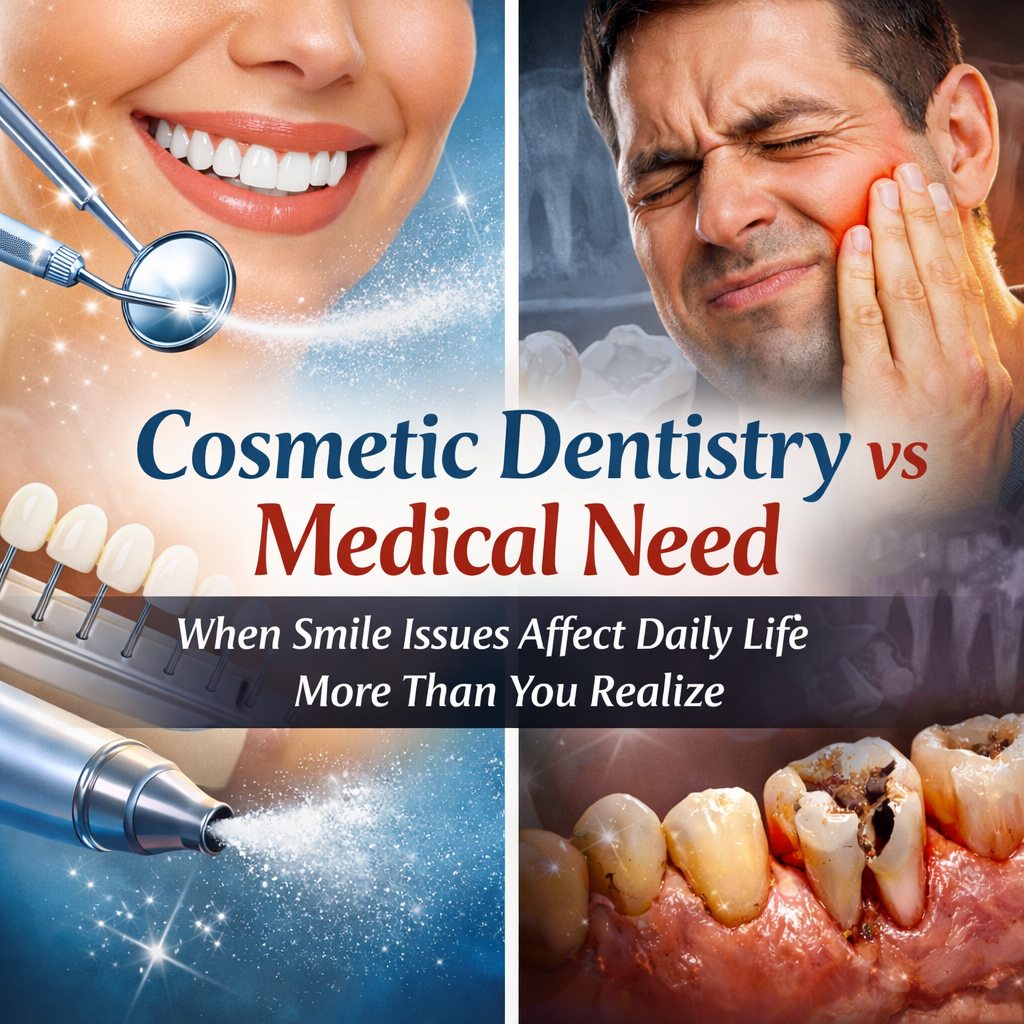
Most people separate dental care into two neat categories: medical and cosmetic. One is seen as necessary, the other optional. A cavity hurts, so it needs treatment. A crooked or stained tooth doesn’t hurt, so it can wait.
But real life rarely follows that clean division.
Many dental problems that begin as “cosmetic concerns” quietly cross into medical territory—affecting speech, chewing, confidence, digestion, jaw health, and even mental well-being. By the time patients realize the impact, the issue is no longer about looks alone.
Understanding where cosmetic dentistry ends and medical need begins can change how people approach their oral health—and why delaying certain treatments often costs more than expected.
Why the Cosmetic vs Medical Divide Is Misleading
The mouth is a functional system. Teeth, gums, jaw joints, muscles, and bite alignment all work together. When something looks “off,” it often signals that something is working off as well.
For example:
- Crooked teeth may interfere with cleaning, leading to decay or gum disease
- Gaps can cause neighboring teeth to shift, affecting bite balance
- Worn or chipped teeth may signal grinding, which stresses the jaw joint
- Discoloration may hide enamel erosion or underlying structural damage
Labeling these issues as purely cosmetic overlooks their long-term effects.
Smile Issues That Quietly Disrupt Daily Life
Many patients adapt to dental problems so gradually that they stop noticing the impact—until it becomes impossible to ignore.
Difficulty Chewing Certain Foods
Uneven teeth, missing teeth, or poor bite alignment force patients to chew on one side or avoid certain foods altogether. Over time, this affects digestion and jaw muscles.
What feels like a preference (“I just don’t eat nuts or apples anymore”) is often compensation for discomfort or inefficiency.
Changes in Speech and Pronunciation
Teeth play a critical role in speech clarity. Gaps, misalignment, or worn edges can subtly alter pronunciation of sounds like “s,” “f,” and “th.”
Many people adjust unconsciously, but prolonged strain can lead to jaw fatigue and reduced confidence while speaking.
Chronic Jaw Pain and Headaches
Smile-related issues often connect directly to bite problems. When teeth don’t meet properly:
- Jaw muscles overwork
- The temporomandibular joint (TMJ) becomes stressed
- Headaches, neck pain, and facial soreness become frequent
Patients rarely associate these symptoms with dental alignment until evaluated properly.
Gum Problems That Start with Appearance
Gum recession is often dismissed as an aesthetic issue—until sensitivity, inflammation, or infection appears.
Exposed roots are more vulnerable to decay, and receding gums compromise tooth stability. What begins as a “long-tooth look” can become a serious periodontal concern.
The Psychological Weight of Smile-Related Problems
The impact of dental issues isn’t limited to physical symptoms.
Research consistently shows that oral appearance affects:
- Self-esteem
- Social interaction
- Professional confidence
- Willingness to smile or speak openly
People may avoid photos, cover their mouth while laughing, or hesitate during conversations. Over time, this self-monitoring becomes exhausting and isolating.
The issue isn’t vanity—it’s quality of life.
When Cosmetic Dentistry Becomes Functional Care
Cosmetic dentistry is often misunderstood as superficial. In reality, many cosmetic treatments are designed to restore balance, function, and health, not just aesthetics.
Orthodontic Alignment
Straightening teeth isn’t only about appearance. Proper alignment:
- Reduces uneven wear
- Improves cleaning access
- Balances bite forces
- Protects gums and bone
In many cases, orthodontic treatment prevents future medical interventions.
Veneers and Crowns for Structural Protection
Severely worn, chipped, or weakened teeth may look like cosmetic concerns—but they are structurally compromised.
Crowns or veneers:
- Restore proper tooth shape
- Protect against fractures
- Improve bite efficiency
- Reduce sensitivity
The cosmetic improvement is a side effect of restoring strength and function.
Tooth Replacement and Facial Balance
Missing teeth change facial structure over time. Bone loss leads to sunken cheeks, altered jaw position, and premature aging.
Replacing teeth—whether through implants or other methods—supports facial muscles and preserves oral health. This is functional rehabilitation, not vanity.
Why Patients Delay Treatment (and Why That Backfires)
Many patients postpone care because:
- The problem doesn’t hurt yet
- It’s labeled “cosmetic”
- They assume treatment is optional or expensive
Unfortunately, dental problems rarely stay static.
A minor alignment issue can lead to uneven wear.
A small chip can progress into a fracture.
Mild discoloration can mask deeper enamel erosion.
Delaying treatment often turns manageable solutions into complex ones.
Insurance Labels vs Clinical Reality
One reason patients undervalue smile-related issues is insurance classification. Many treatments are labeled “cosmetic” for coverage purposes—even when they have clear functional benefits.
Insurance definitions are financial tools, not medical judgments.
A treatment can be:
- Clinically necessary
- Functionally restorative
- Psychologically beneficial
…while still being excluded from coverage.
That doesn’t reduce its importance.
How Dentists Evaluate Medical vs Cosmetic Need
Responsible treatment planning looks beyond appearance. Dentists assess:
- Bite relationship and jaw movement
- Tooth wear patterns
- Gum health and bone support
- Speech and chewing efficiency
- Patient comfort and habits
A treatment plan that improves appearance but worsens function is never appropriate. The best outcomes address both.
Signs Your “Cosmetic” Issue Deserves Medical Attention
You should seek evaluation if a smile concern is accompanied by:
- Sensitivity or pain
- Difficulty chewing
- Frequent headaches or jaw discomfort
- Gum bleeding or recession
- Progressive wear or chipping
These signals indicate that the issue affects oral health—not just looks.
The Long-Term Cost of Ignoring Smile Problems
From a practical standpoint, early intervention is often more economical.
Correcting alignment early can prevent:
- Extensive restorations
- Gum surgery
- Tooth loss
Strengthening weakened teeth early can avoid:
- Root canal treatments
- Extractions
- Complex replacements
What feels optional today may become unavoidable tomorrow.
Reframing Cosmetic Dentistry as Preventive Care
When done responsibly, cosmetic dentistry often functions as preventive dentistry.
It aims to:
- Distribute bite forces evenly
- Protect teeth from excessive wear
- Support gum and bone health
- Improve oral hygiene effectiveness
The improved smile is visible—but the real benefit is stability.
Final Thought: A Healthy Smile Is Rarely Just About Looks
The idea that cosmetic dentistry is indulgent overlooks how deeply oral health connects to daily life. Smiling, speaking, eating, and expressing emotion all depend on a functional, comfortable mouth.
When dental issues interfere with these basics, they stop being cosmetic concerns and become health concerns—regardless of labels. The most effective dental care doesn’t ask whether a problem is cosmetic or medical. It asks:
Is this affecting how you live, function, and feel every day?
Insurance Labels vs Clinical Reality
One reason patients undervalue smile-related issues is insurance classification. Many treatments are labeled “cosmetic” for coverage purposes—even when they have clear functional benefits.
Insurance definitions are financial tools, not medical judgments.
A treatment can be:
- Clinically necessary
- Functionally restorative
- Psychologically beneficial
…while still being excluded from coverage.
That doesn’t reduce its importance.
How Dentists Evaluate Medical vs Cosmetic Need
Responsible treatment planning looks beyond appearance. Dentists assess:
- Bite relationship and jaw movement
- Tooth wear patterns
- Gum health and bone support
- Speech and chewing efficiency
- Patient comfort and habits
A treatment plan that improves appearance but worsens function is never appropriate. The best outcomes address both.
Signs Your “Cosmetic” Issue Deserves Medical Attention
You should seek evaluation if a smile concern is accompanied by:
- Sensitivity or pain
- Difficulty chewing
- Frequent headaches or jaw discomfort
- Gum bleeding or recession
- Progressive wear or chipping
These signals indicate that the issue affects oral health—not just looks.
The Long-Term Cost of Ignoring Smile Problems
From a practical standpoint, early intervention is often more economical.
Correcting alignment early can prevent:
- Extensive restorations
- Gum surgery
- Tooth loss
Strengthening weakened teeth early can avoid:
- Root canal treatments
- Extractions
- Complex replacements
What feels optional today may become unavoidable tomorrow.
Reframing Cosmetic Dentistry as Preventive Care
When done responsibly, cosmetic dentistry often functions as preventive dentistry.
It aims to:
- Distribute bite forces evenly
- Protect teeth from excessive wear
- Support gum and bone health
- Improve oral hygiene effectiveness
The improved smile is visible—but the real benefit is stability.
Final Thought: A Healthy Smile Is Rarely Just About Looks
The idea that cosmetic dentistry is indulgent overlooks how deeply oral health connects to daily life. Smiling, speaking, eating, and expressing emotion all depend on a functional, comfortable mouth.
When dental issues interfere with these basics, they stop being cosmetic concerns and become health concerns—regardless of labels. The most effective dental care doesn’t ask whether a problem is cosmetic or medical. It asks:
Is this affecting how you live, function, and feel every day?
FAQ’s
1. How can a dental problem be cosmetic and medical at the same time?
Many smile issues affect more than appearance. Crooked, worn, or missing teeth can interfere with chewing, speech, cleaning, and bite balance. While they may look cosmetic at first, their impact on daily function often makes them a medical concern as well.
2. If my teeth don’t hurt, is treatment really necessary?
Pain is not the only sign of a dental problem. Issues like misalignment, grinding damage, or gum recession can progress silently for years. By the time discomfort appears, the problem is usually more complex and harder to treat.
3. Why do dentists recommend treatment for problems I thought were only aesthetic?
Dentists evaluate how your teeth function together—not just how they look. If a smile issue is causing uneven wear, jaw strain, gum problems, or hygiene difficulties, treatment may be recommended to prevent long-term damage.
4. Are cosmetic dental treatments only about improving confidence?
Improved confidence is a benefit, but not the only one. Many cosmetic treatments also restore strength, protect weakened teeth, improve bite efficiency, and reduce strain on the jaw and surrounding muscles.
5. How do I know when a cosmetic concern has become a health issue?
If a smile issue is linked to sensitivity, difficulty chewing, jaw pain, headaches, gum bleeding, or ongoing tooth wear, it has likely moved beyond appearance alone and deserves clinical evaluation.
